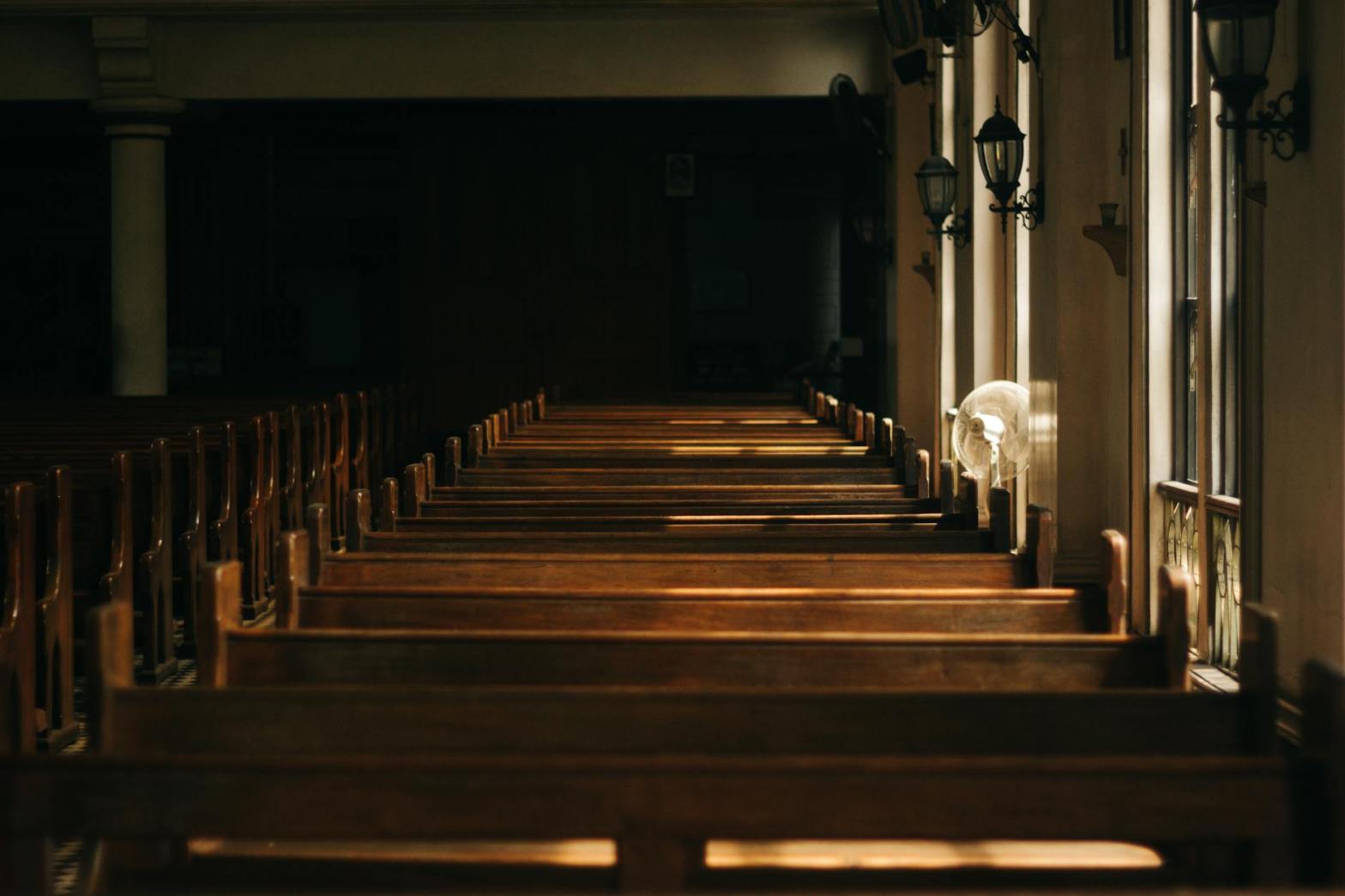
Steve Kneale raises an interesting question for us here. Have we been too focused on attempting to be less “churchy” when that is exactly what people ar looking for, something that looks, feels and sounds like we expect church to be.
This is a helpful question, coming at a point when reports, anecdotal evidence, and I would say personal experience too, is encouraging that we are seeing increased interest in church, Christianity, the Gospel. At a leaders event for our little cluster of churches in Birmingham recently, we were encouraged to think about how we might respond to signs of increased openness amongst young people. Does /Steve’s article mean that we should do or rather change nothing.
Wel, perhaps that is so. I think that Steve is absolutely right to draw our attention to the essential point that the Lord is sovereign, it is his work and he is capable of growing his kingdom regardless of our worst efforts. I also don’t take Steve to be saying that we should be thinking about these kinds of things.
I have 2 questions/challenges in response to his article. First, whilst we may be seeing people engaging with more “churchy” or traditional forms of church now does this mean that more traditional churches are best placed to engage newcomers? Some things to bear in mind here are as follows.
- Whilst there have been reports of interest in more traditional styles of Christianity in recent years, from what I’ve observed, the expectations have tended to be around liturgy, evensong, choral music and chants rather than what a free church independent evangelical might consider “churchy”. Pipe organs rather than electric organs, vestments rather than jackets and ties if you like.
- I’m not sure that people are choosing “churchy” over “unchurchly.” Rather, I think we have seen that over a period of time, people were more likely to engage with things like Messy Church and café style church rather than more traditional forms of church. One reason for that is because if you were going looking for people rather than just waiting to come to you, then you were more likely to be doing those kinds of things. Secondly, if those churches that didn’t try different things are now seeing people coming in then we need to understand the extent to which they are benefiting from a generally rising tide. What this may also mean is that when we dig deeper we may also find that in some cases, there has been some past contact through something like Messy Church.
By the way, I’m not convinced that people have stopped doing or talking about things like messy church or café style church. Some people will have jumped off of a bandwagon. Those are the kinds of people who jump on and off of such things and they are probably trying to learn a few Latin chants and buying some incense right now. However, lots of churches are continuing or starting to try such things. To be fair, results are probably mixed but that just goes to show that none of these things are silver bullets. If you manage to do “churchy church” poorly and mangle or miss gospel opportunities the you will do the same café or messy style.
My other challenge is this. Steve’s assumption seems to be that the reason we did those kinds of things was purely to attract people in. Is the only reason for trying to be “unchurchy” to attract disinterested visitors? I don’t think it is. I write as someone who has been in leadership at churches where we’ve run café style gatherings and messy church as well as where we’ve tried to do other things to make things feel less like “church” as we know it. It is worth talking about why I/we have done those things.
First, the reason why we ran a café style format at our Sunday evening gathering at Bearwood, or indeed back when I was a church member and involved in leading a Sunday evening, café style meeting at Rochester Baptist Church 20 years ago was not to try and be more like a café, not to be more appealing to seekers but rather because that made sense in terms of two things we felt were key to what church should be like. We wanted to eat together and give space for one anotherIng. We wanted to dig deeper into God’s Word and found people engaged more and deeper when we spent significant time discussing and asking questions. I’m not sure that a one hour Bible study would be on your seeker sensitive check list. As it happens, no Christians did come along, sometimes in quite significant numbers.
Secondly, we opted for a Messy Church format to a Sunday afternoon gathering because we had experienced some positive engagement with families at an afterschool club we ran for a while. We had done this with the help of OM teams and realised that we didn’t have capacity for that kind of thing without the teams. A Sunday afternoon event worked, we could get the people from the church we needed and also had parents involved. More than that though, we wanted to reach whole families and we found that parents wanted to stay, understandable if they, as quite a few did, were from other faith backgrounds including Islam. We encouraged parents to talk with their children about what they had heard.
Thirdly, I think that other things we have done along the way have, as much as anything been driven by a conviction that churchy church, whatever that is, isn’t necessarily what the Bible says that church is about. So, our desire has been to be constantly reforming. This also means that even if people are turning up to certain styles of church service that I wouldn’t necessarily say that we need to try and copy those things. This isn’t about pragmatism. You won’t catch me offering evensong or putting a dog collar on anytime soon. In other words, don’t do things just because you think they will appeal to seekers. You may find though that when you make changes or try things for good reasons that you do attract seekers.
 Faithroots