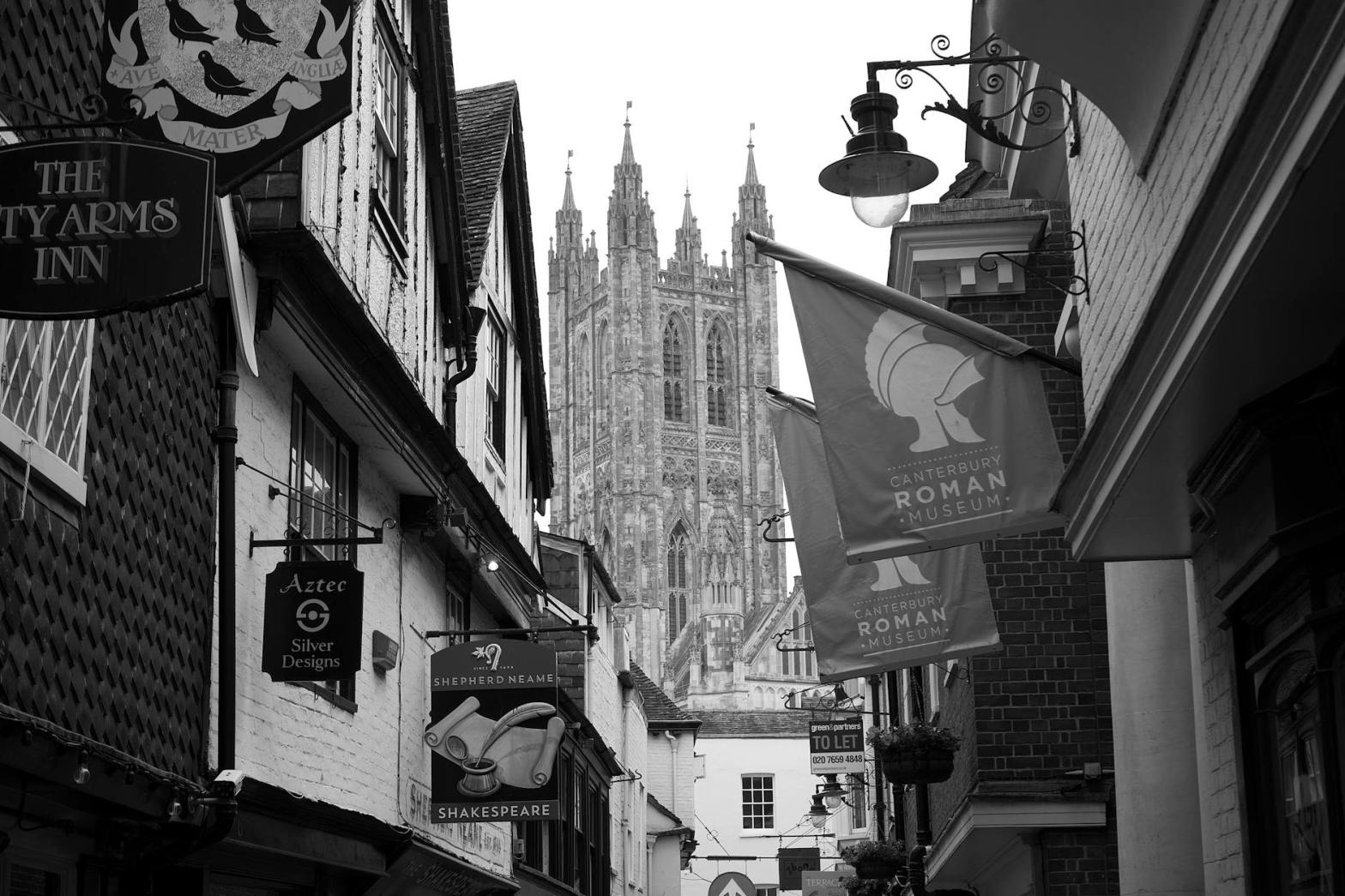
I’ve written a bit recently about Christian Nationalism and I distinguished a contemporary form of Christian Nationalism which in effect simply christens/baptises ethno-cultural nationalism from what I referred as Christian nation-alism, the idea of the nation having a Christian identity. One form of the latter involves having a national/established church as is the case with the Church of England. We might refer to the Church of England as National Christianity. This also helps us to follow a working example of some of the problems with that kind of approach, some of which has come out quite explicitly with recent Church of England decisions, particularly the appointment of the new Archbishop of Canterbury and responses to it.
Let’s look at the recent appointment from that specific perspective. There were perhaps four key factors that influenced the decision and are reflecting that specific decision. First, there is the way in which the appointment took place. It involves a name being recommended by a Crown Appointments Commission to the Prime Minister who then advices the King on the appointment. Historically, the Prime Minister might receive more than one name, Mararet Thatcher chose George Carey from two options to recommend. Nowadays, it tends to be one the one name and you are much less likely to see a Prime Minister directly determining the appointment. However, that the Prime Minister and the King are involved in the process means that the Commission will be alert to their perspective and who will and won’t be acceptable to them. What it means is that the appointment is being shaped by political criteria rather than Biblical criteria. Further, it is a process that takes the decision out of the hands of the Church itself in terms of its actual membership.
We can also see here how politics not only shape the appointment in terms of identifying candidates, the political culture around us limits the ability of anyone to speak in from outside and challenge working presumptions. Specifically in this case, the appointment is going to substantially affect the relationship between the Church of England and the rest of the Anglican Communion. However, would politicians who have a specific anti-colonial concern even consider that to be a negative? Will they be worried about a situation where the new Archbishop is no longer able to fulfil their role as spiritual leader of the Anglican Communion?
Secondly, the established nature of the Church of England, as a church that is meant be for all, necessitates that there was always going to be a liberal Archbishop this time because broadly speaking the role alternates between those leaning more liberal and those leaning more evangelical whilst ensuring that they will be broadly acceptable to the other camps. This also means that you are unlikely to get someone who rocks the boat. If they are a theologian, then they will be of the safe variety, happy to chat away about early Church history whilst staying clear of doctrinal controversy.
Thirdly, I think that this also meant that you were always going to end up with a female Archbishop this time. Complementarians had always satisfied themselves, I think, with the idea that they would always be provided for, that the powers that be would recognise it to be impossible to have a situation where the ultimate lead elder in the church was not male because of the problems this would cause Anglo-Catholics and conservative evangelicals. However, and I think this is part of a larger problem that conservative evangelicals have. Everyone failed to consider things from the feminist and egalitarian perspectives (both in the church and more widely). From that perspective, the church could not claim to have embraced egalitarianism if the possibility of a female Archbishop was no more than hypothetical. I wonder too whether this became the opportune moment because Keir Starmer might just be ina hurry to sign off on things that might contribute to his legacy.
Fourthly, I think that it affects the response and attitude to Evangelicals within the Church of England. You see, if your foundational doctrine of first importance, is the need for an established, national church, then you are likely to prioritise staying in that church. Furthermore, it means that you are likely to look on the leadership and structures of the church in the same way that you look at the nation, whose fabric it is part of. You might not particularly like the current king, his personality, his political outlook etc. However, you still, from this perspective, respect the office and so submit to him as King and remain a citizen here. I can’t help feeling that the same attitude leaks across into church life and so we see evangelical Anglicans, no matter how grudgingly offering their congratulations, obedience and loyalty to the new Archbishop.
These four factors together, in my opinion strengthen the argument for disestablishment. People often argue that having a national church gives Christianity a voice, enabling the Church to shape our country. In fact, the reverse is true. The Church is shaped by culture and society around it. It also of necessity ends up being a broad church attempting to please everyone and upset no one but in fact pleasing no-one and upsetting everyone.
A disestablished church would finally free it to decide what kind of church it wants to be. This it free up those who recognise it to be on a different trajectory to the one they want to be on to leave and join or start new groupings. This would not hinder true Christian unity and in particular it would strengthen Evangelical unity by enabling evangelical Anglicans to forge ahead with stronger ties to other evangelicals.
 Faithroots