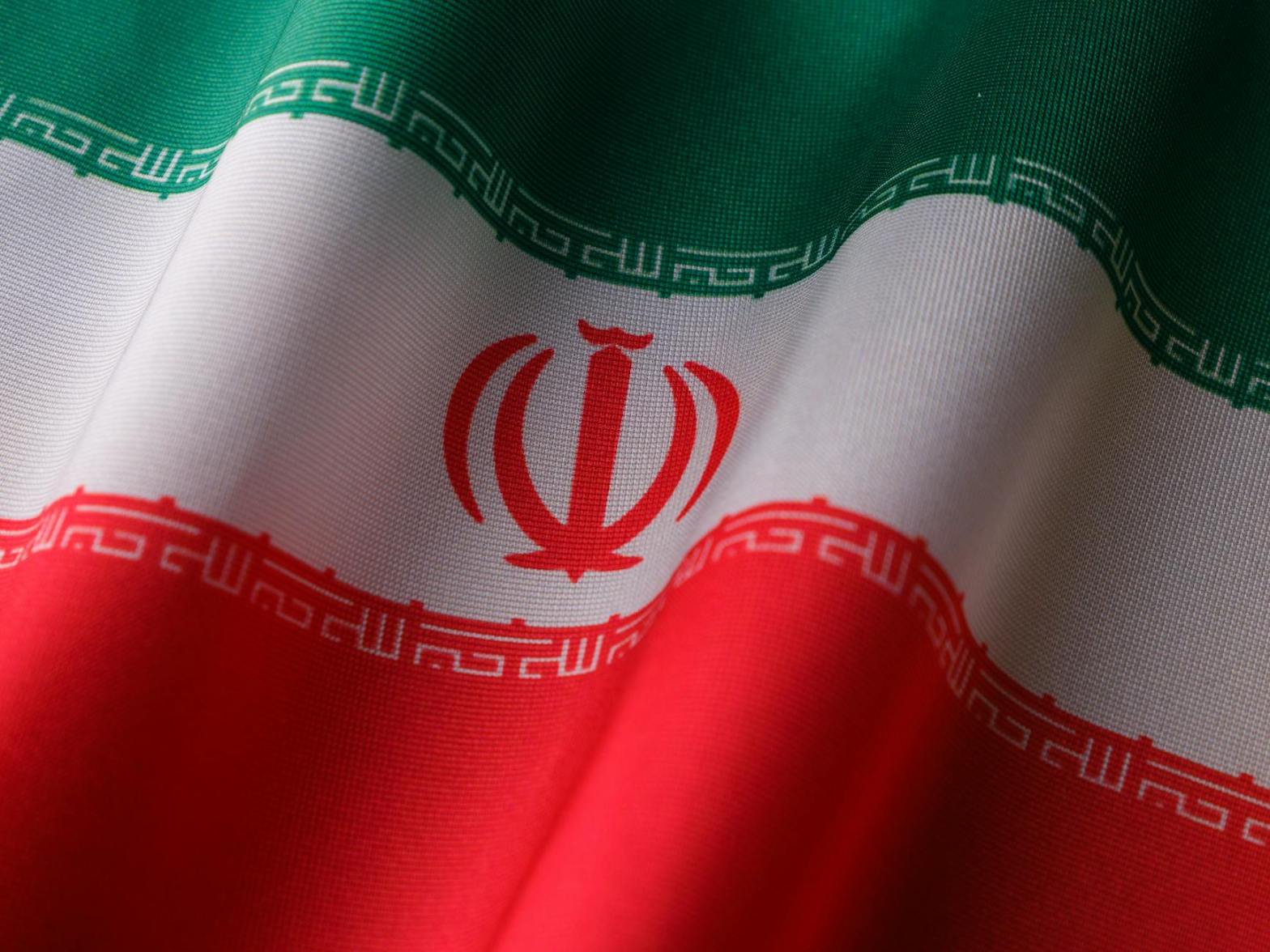
I’m sure that you’ve been watching the news about what is happening in Iran closely with a mixture of emotions. There is hope that an evil regime is finally crumbling. That brings hope not just to the citizens of Iran but also to the wider middle east where Iran has had a malign influence through the regime’s proxies over many years. Whilst the removal of the Ayatollah’s doesn’t guarantee peace and a solution to the Palestinian question, I suspect that without their removal peace is nigh on impossible But there will also be other emotions too as the brutal attempt to suppress protest through cold blooded murder will bring anger, grief and fear. We may have aa lot of questions too.
Here are two questions I’ve been thinking about, in no particular order.
- Response by governments including our own
How can and should our governments respond? What is appropriate, proportionate, legitimate. Let’s consider a couple of options that seem to be on the table. First of all, there have been calls to proscribe the Revolutionary Guard as a terrorist organisation. So far the government has resisted calls to do this and indeed, the previous government were also cautious about this. In the Daily Telegraph it is reported today that:
“On Monday, Peter Kyle, the Business Secretary, confirmed that the Government would not proscribe the IRGC, adding that it had already used the “full extent” of sanctions against Tehran. He made reference to remarks by Jonathan Hall, the independent reviewer of terror legislation, who said last year that proscription would not be “appropriate” for a foreign state organisation.”[1]
I’m not completely convinced by this. The government seem to have found the legislation reasonably flexible in terms of groups that have been proscribed. To be sure, the close proximity of the guard to the regime may complicate things but perhaps now is the time to determine whether we consider the IRGC a legitimate arm of the state or not. This strikes at the heart of whether we recognise the regime as legitimate. But further, the legislation is clear enough:
(4)The Secretary of State may exercise his power under subsection (3)(a) in respect of an organisation only if he believes that it is concerned in terrorism. (5)For the purposes of subsection (4) an organisation is concerned in terrorism if it— (a)commits or participates in acts of terrorism, (b)prepares for terrorism, (c)promotes or encourages terrorism, or (d)is otherwise concerned in terrorism.[2]
The sole question to answer is whether or not the organisation is involved in terrorism.
The second question is as to whether or not it is possible for states to become involved through military action. The US are currently contemplating whether or not to launch military strikes. There are two questions to consider here. First, would this be legitimate within international law? I think there are two possible arguments in favour of legitimacy. First of all, there is Article VII of the UN Treaty that authorises action for peace. There seems to be a level of duty to protect civilians and there is precedent from both Syria and Libya on this, though this is not an undisputed area of international law. Additionally though, it is arguable that the regime through its proxies has already been in conflict with the US and UK.
In terms of wisdom, the question is about whether or not such action would help and hinder, whether it would lead to greater harm. One concern is that unilateral action by Israel and/or the US may further inflame wider tensions in the Middle East and even become a source of propaganda against the protestors. So, ideally there should be an attempt to seek approval through the UN recognising that a motion would likely be vetoed by Russia and China. However, to at least have a majority of member states behind action would help and to have as broad a coalition too.
- The response of activists and protestors here
Like many others, I have been struck by the silence of the many who have participated week in, week out in protests against Israel. We pick and choose our bad guys. Now, it is one thing to determine after serious consideration that an issue is not of the same order as another or that we disagree with/don’t believe the allegations/warnings being raised. I think we have to check carefully though as to why we may be more likely to care about some matters more than others and believe the claims of some causes more than others. However, to completely ignore an issue completely raises questions about what motivates people to protest.
- Preferred outcomes and our own ideologies
This gets us to thinking about what our response should be as Christians. Now, it is true that regime change will not give true justice and lasting hope. However, we can say that “Christ is the real need” in a manner that can start to sound trite. Yes, the people of Iran need the Gospel but does that not also mean that they need freedom from tyranny?
I’m also thinking about some of the arguments I’ve heard over the past year about Christian Nationalism. I’ve heard several people say that we have to choose between Christian nationalism and secular nationalism, that there are no other options and that the secular option is always malign. How then do we view a situation where a Christian nation is nowhere near being an option on the table and where people are choosing between an Islamist regime and a secular state? Is the move to a secular state really no better or even worse than sticking with the theocratic option. Most Iranians continue to suffer the oppression of the Ayatollah’s until the country is ready for a Christian government?
I suspect though that in reality, most people haven’t really thought through their own philosophies. They are only focused on their perceived needs and freedoms in the US and UK. It is important that when developing a philosophy, we consider whether or not it works beyond out own context and needs.
- What can we and should we be doing?
I recognise that there are many challenging and horrendous situations around the world competing for our attention right now, Israel and Gaza, Ukraine, Venezuela, Nigeria, The DRC among others spring to mind. However, I do think that it is right, particularly for the UK church to be concerned about Iran. Here is a place that has a significant part in the Biblical narrative, a part in the redemption story. More than that, over the past 20 or more years, Iranians here in the UK have been coming to Christ and bringing new life and the hope of revival into our churches. This also means that many of us will know Iranian brothers, sisters and seekers personally.
There is not a lot that we can be doing. However, we can be doing two important things. First, we can check in on Iranian brothers, sisters and friends. This is not just about making sure there are okay now, though it is, rather, it is also about being willing to hear their stories. Secondly we can be praying for Iran, that peace and justice will be achieved, that believers will be kept safe and remain faithful, and that God will use these events to bring many more to himself.
 Faithroots