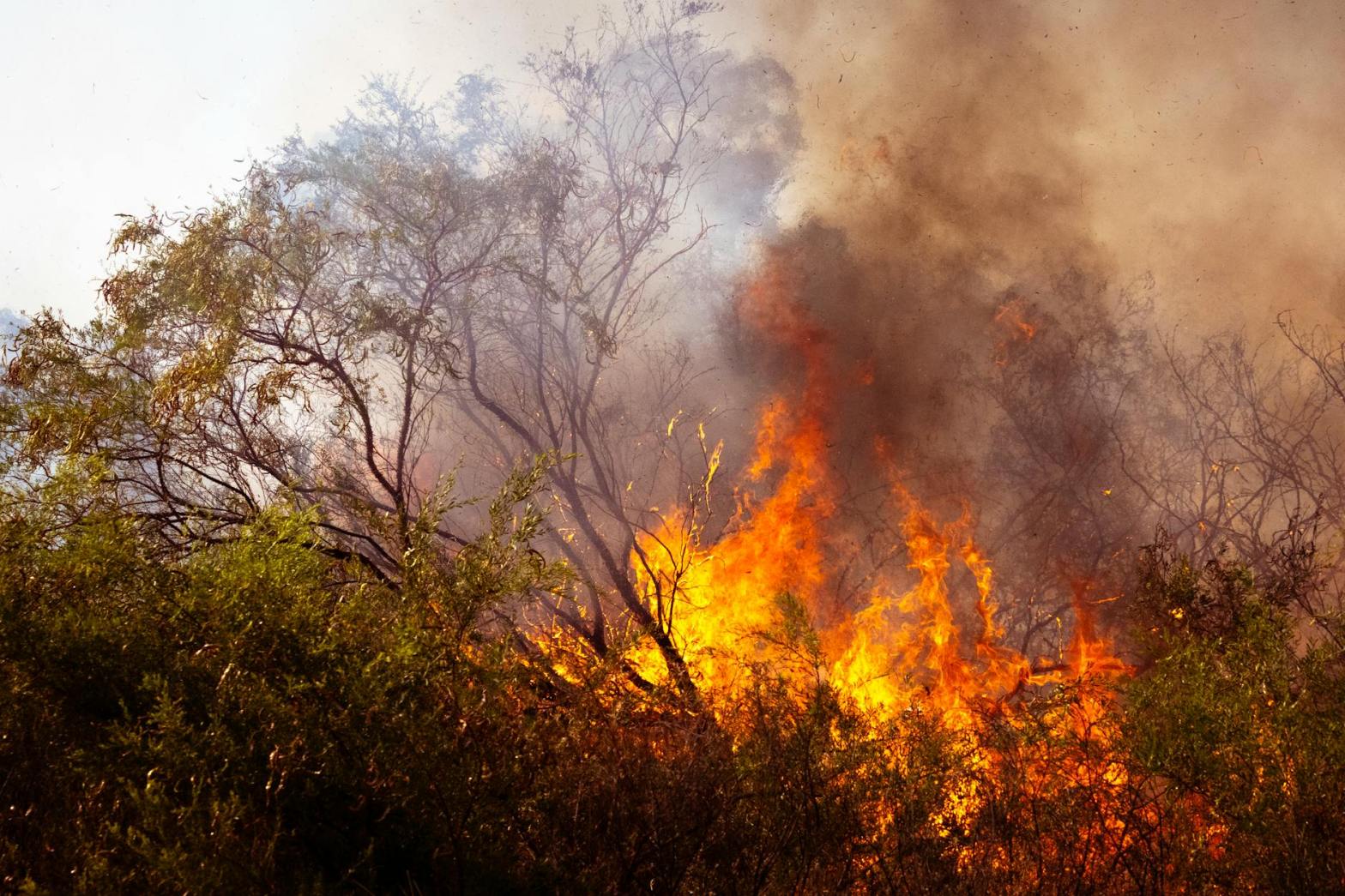
The Burning Bush
Moses joins in taking responsibility for his father-in-law, Jethro’s sheep. One day, he is taken the flock to pasture near to Horeb or Sinai. The author identifies this as the Mountain of the Lord, foreshadowing what will happen years later when God will choose this place to meet Moses and to give his Law to the people. He sees a bush that is on fire. That’s not the unusual thing here though. In the heat of the desert, burning bushes were two a penny. What catches his attention is that the bush is not consumed by the fire. Specifically, we are told that “the angel of the Lord” appears to Moses. Yet, throughout the encounter, and this would be similar for other Biblical encounters, there seems to be an overlap between the angel and the Lord himself. I think that we are meant to pick up on this. It is God whop is speaking, God who is revealing himself and yet this cannot be unmediated. So, he has a messenger, a representative to speak for him.[1] Moses cannot encounter God, directly, face to face and live. The writer to the Hebrews picks up on this theme when he observes that the new covenant is different to the old as it is not mediated by angels, although still accompanied by signs (Exodus 3:1-3).[2]
As he draws near, God speaks to him. He tells him that this is holy ground so he is to respond with reverence and introduces himself as the God of Moses’ ancestors: Abraham Isaac and Jacob. Moses has responded to God calling him by name by saying “Here am I” but he is afraid when he discovers that it is the Lord speaking to him. He hides his face (v4-6).
God tells Moses that he has seen the distress caused to his people and has heard their cry. So he has come to rescue them, to take them from slavery in Egypt, to Caanan, a land described as “flowing with milk and honey” to indicate its prosperity. The means by which he will accomplish this is to send Moses to speak to Pharoah (v7-10)
Objections
Moses responds with two objections. First, who is he to speak to Paraoh and then who is he to lead the people, what is he to say to them when they ask “who sent you”, or in other words, on what authority. God responds by promising his presence with Moses when he appears before th King. In response to the question “Who shall I say sent me?” God responds “I am who I am.” He is to tell them “I Am has sent me.” God then tells Moses to say to the Israelites that it is the God of their forefathers: Abraham, Isaac and Jacob that has sent him. God introduces himself by the name YHWH, with the Hebrew seeming very similar to “I Am”. In fact, rather than seeing the name YHWH as developing from “I am”, given YHWH’s use in Genesis, we might conclude that it is the statement “I am who I am” which is a play on the covenant name of YHWH. “I am who am” reflects the sense that God is self existent and therefore not to be challenged or messed with (v11-17).
God now tells Moses to go first to the elders or tribal heads of Israel. He promises that they will listen to him even if Pharoah won’t. He says to start simply with a request to go three days into the desert to sacrifice. He knows that Pharoah will even turn this small request down. God’s plan is to bring his own strength against stubborn Pharoah by afflicting the Egyptians with signs and wonders. The Egyptians will be favourable to the Israelites and so they will not leave Egypt empty handed but blessed. There is an echo here from when Abram had gone down to Egypt with Sarai, claiming that she was his sister. God sent plagues against the Pharoah then too, for taking Sarai into his harem. Furthermore, Abraham had left Egypt blessed with greater riches than he arrived with (v18-22).[3]
Signs and confirmation
Moses objects that the people will not listen to him or believe him (4:1). So God responds with a sign by turning Moses’ staff into a snake. Moses runs away in fear from the snake but God tells him to catch it by its tail, a dangerous move, an act of faith because snakes can twist round to bite, you do better to grab them by the neck, so I’m told. However, as soon as Moses grabs the snake, it becomes his staff again (4:2-4). God says that this will be a sign that he has appeared to Moses. He then provides another sign by afflicting Moses’ hand with leprosy and then curing it (v6-7). If they still don’t believe Moses after a second sign, he is to take water from the Nile and pour it on the ground, it will become blood. Consider how Jesus echoes these signs in his ministry. We connect serpents with Satan from Genesis 3. Jesus is the one who has authority over the demons and so over Satan. Jesus was the one who came to heal lepers, making them clean. Jesus’ first public sign, according to John was to turn water not into blood but into wine (v8-9).
Moses again protests, that he lacks eloquence. The apostle Paul would later also claim to lack rhetorical skill but this for him was not a limit to his ability to serve and speak for the Lord.[4] God insists to Moses that this is no barrier, he is the one who gives speech, sight and hearing and it is for him alone to withhold it. He again exhorts Moses to go, promising his presence with him, just as Jesus would commission his disciples in Matthew 28:19ff to go and promise his presence with them and us (v10-12).
However, Moses continues to protest and begs God to send someone else. This causes God to be angry with him but still God provides for him. His brother, Aaron is already on his way to meet him and he will speak on Moses’ behalf (v14-17).
Moses, then goes to tell his Father-in-law that he is returning to Egypt and leaves with his blessing (v18-20). God again speaks to Moses, telling him to perform the signs he has been shown in front of Pharoah. However, God also warns Moses that the king will not listen and God will even harden his heart. Moses is to speak of Israel as God’s firstborn son to Pharoah., It is this image that Hosea 11:1 will pick up on and that Matthew will apply to Jesus (v21-23).
On the way back, Moses almost dies. God meets him and is ready to strike him down dead. It’s a strange incident. We aren’t explicitly told why this happens but there is a clue in that Moses’ son needs to be circumcised. Perhaps this failure to keep the covenant reflects some of the half-heartedness Moses has about his people, God and his promises reflected in his attempts to refuse God’s commission. We have seen that God has been angry at Moses over his answering back and stubbornness, a stubbornness that will later be seen in the people of Israel when they are in the wilderness. Zipporah circumcises their son and then touches Moses with the foreskin. This pre-echoes the Passover when a lamb’s blood will protect the firstborn sons. This is significant in the context of God’s words just above in the text about the firstborn son (v24-26).
Moses meets Aaron whom God has instructed to join with him. He reports everything to him. They then go to meet with the people together and demonstrate the signs. The people initially respond in belief (v27-31).
[1] C.f. Enns, Exodus, 96.
[2] C.f. Hebrews 2.
[3] Genesis 12:17-13:1.
[4] 2 Corinthians 11:6.
 Faithroots