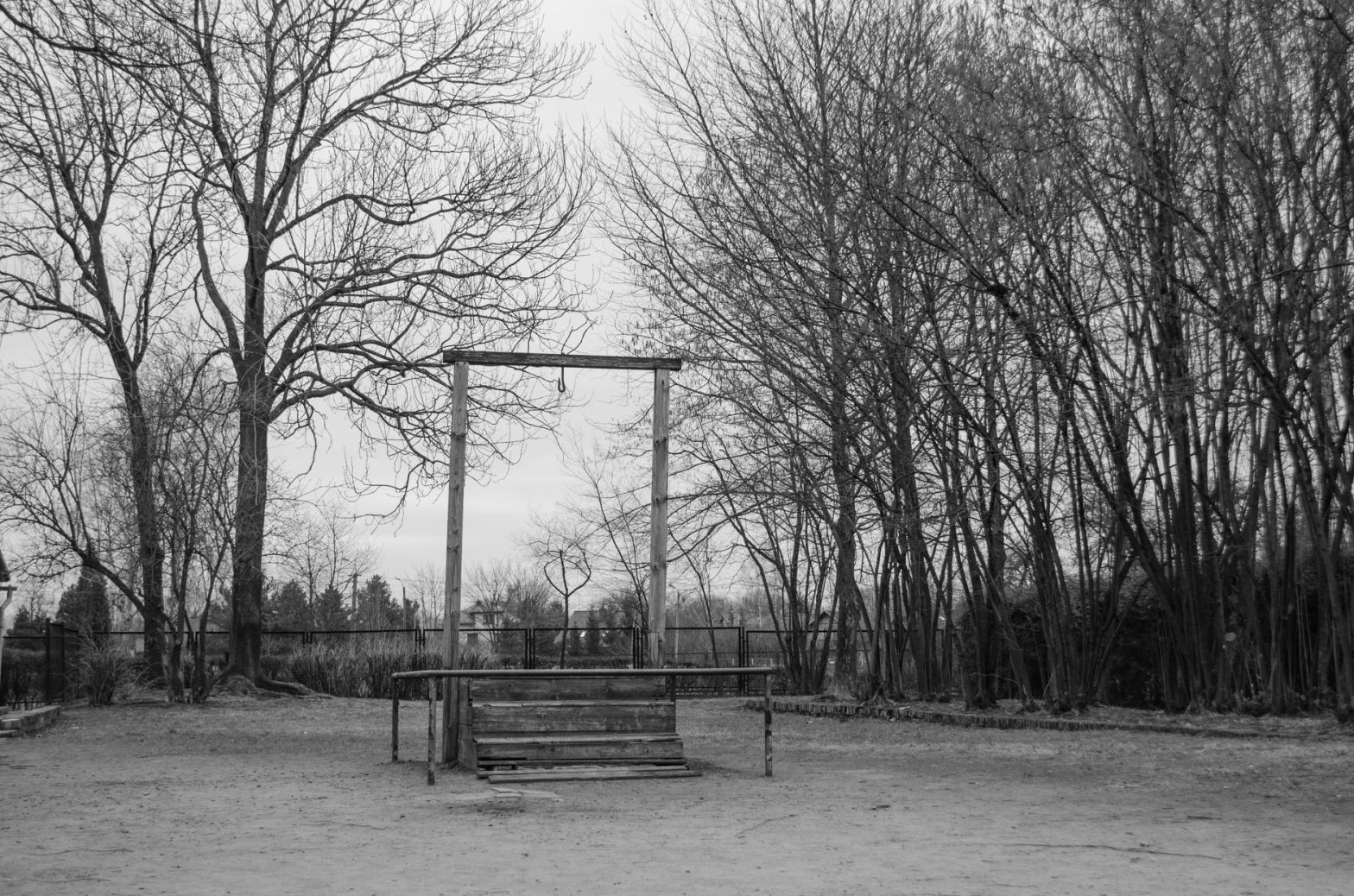
The understandable response from some people to the horrific attack in Belfast on the 8th June and the reporting of the trial of Henry Nowak’s killer has been to call for a return of the death penalty. I say “understandable” because I can fully grasp why for many that is the gut response. I share the instinct. However, over the years, I’ve come to the conclusion that capital punishment is not the answer.
Partly that’s about recognising the challenges of doing justice in today’s world. There have been far too many examples of miscarriages of justice in our legal system that I would not want to carry the risk. People often say that the death penalty would be reserved for particularly heinous atrocities and only where it is proven beyond all reasonable doubt. The problem with that is the burden off proof for all convictions is “beyond reasonable doubt.” Additionally, were we were to insist on stricter criteria, a higher burden of proof still (whatever that would be) and a unanimous verdict, we might find ourselves in a situation where juries would be reluctant to come to a firm conclusion, one of the reasons for capital punishment being restricted and then eventually abolished in the first place.
I think that it is possible to agree in principle with the death penalty but to conclude that it simply is not practical for the reasons above. However, I also want to push back on the argument that the death penalty is so obviously taught in Scripture that we must at least accept the principle. I’m not saying that it is definitely absent from Scripture. I am saying that there is a place for caution when considering the case.
The covenant with Noah
The starting place for an argument in favour of the death penalty is Genesis 9. The key verses are:
“4 But you shall not eat flesh with its life, that is, its blood. 5 And for your lifeblood I will require a reckoning: from every beast I will require it and from man. From his fellow man I will require a reckoning for the life of man.
6 “Whoever sheds the blood of man,
by man shall his blood be shed,
for God made man in his own image.
7 And you,[a] be fruitful and multiply, teem on the earth and multiply in it.”
This has often been taken as a mandate for human justice, fellow men are to shed the blood of those who shed blood. We need to take the text seriously and recognise that there is a prima facie case for the death penalty in the Bible. This is sometimes combined with the reference to the State not bearing the sword in vain in Romans 13.
However, the argument is not the slam dunk that is sometimes suggested. Notice a few things about the context. On one side of the statement about human murder and its consequences is the primary command not to eat meat with blood still in it. Blood is significant to life. The symbolic nature of abstaining from consuming animal blood is meant to point towards the value of human blood. God takes seriously death, whether caused by an animal or another human being. Note too that it is God himself who demands a reckoning. After the comment about humanity comes a repetition of the creation blessing “be fruitful and multiply”. Those who seek to bring death are contrasted with those who are fulfil God’s mandate to bring forth life.
This reminds us that the statement come in the context of God’s covenant with Noah accompanied by the sign of the rainbow. I believe this to be important. We sometimes treat the covenant with Noah as a form of common grace, a generic commitment to all humanity as per the original creation mandate. This is how the “blood food” commands have at times been approached in discussions about Acts.
However, I’m not so sure. There is much in how God deals with Noah that points to him being dealt with as a significant part of God’s special people. There are a few clues towards this. First, that whilst some people talk about a covenant of works prior to the Fall, properly speaking, the Noahic Covenant is the first one. Secondly, the covenant will flow through Shem’s line, he will carry on the blessing. Ham will fall under curse, outside of God’s grace, whilst Japheth “dwells in Shem’s tents” suggesting that he is dependent on his brother for covenant provision. Thirdly, Noah receives the covenant as the one who has acted to deliver or save creation. This is a covenant with a mediator. Fourthly, there are precursors to the terms of the Mosaic covenant such as the way that clean and unclean creatures are distinguished and treated differently.
Another thing to consider is that the language here does not have the feel of command, compared to examples of statutes in Exodus through to Deuteronomy. Indeed, it is poetic. There is a parallel.
- Whoever sheds the blood of man
- By man shall his blood be shed
Indeed, there may even be a chiastic pattern at work:
A Whoever sheds the blood
B of man
B By man
A shall his blood be shed
So, whilst some commentators are inclined to treat Genesis 9:6 as a command, there are clues that point us towards something different. Is this intended to be more descriptive, identifying the consequences of bloodshed, a litany of death. This would make it equivalent to the proverbial saying “live by the sword, die by the sword.”
The Law of Moses
The death penalty is provided for in the Law of Moses. However, this is not just for murder but also for other sin such as adultery. (see Leviticus 20:10 and Deuteronomy 22:22) and wider examples of sexual immorality (see Leviticus 20:10-16). I believe that only the strictest of theonomists want to reintroduce such laws. Indeed, other provisions seem to have been available to the people of Israel. Joseph’s response to Mary’s pregnancy was to seek to quietly divorce her.
We can see the death penalty in the context of the covenant. The collective curse for Israel’s sin and rebellion was to be exiled from the land, a form of collective death. Individual sin, especially unfaithfulness also meant exile from the place of covenant, demonstrated vividly by execution.
We should be careful before attempting to apply the laws of ancient Israel directly over to modern nation states. Those laws were intended to mark out Israel as God’s chosen people, a holy nation. Modern nation states do not fulfil that role.
Christians will want, rather to think about how such texts apply through Christ to us as God’s people today, the Church. We see how all deserve the penalty of death. That penalty has been met in Christ.
Conclusion
My position on the death penalty is a cautious one. I can see the argument from Scripture. I can also understand the wider ethical arguments for full justice. However, I think there are legitimate challenges to the claim that a Biblical worldview requires that we accept the death penalty.
Even if we find ourselves agreeing in principle from Scripture with capital punishment, this does not require us to insist on its practical fulfilment today. We are all too aware of the fallibility both of individuals and of the justice system as a whole.
The present system is of course imperfect. For some people, lengthy prison sentences will be seen to have weaknesses. Prison often fails to rehabilitate, does nothing restorative towards the victims and will be seen as falling short of retributive justice. Though on the other hand, for some, a quick death may feel like the easy way out rather than a lifetime of shame and guilt.
Perhaps the imperfections are a good thing, reminding us that only the Lord offers perfect justice because only he alone is able to judge perfectly. He will demand a reckoning and that will either be met on judgement day or has already been met by Christ at Calvary.

