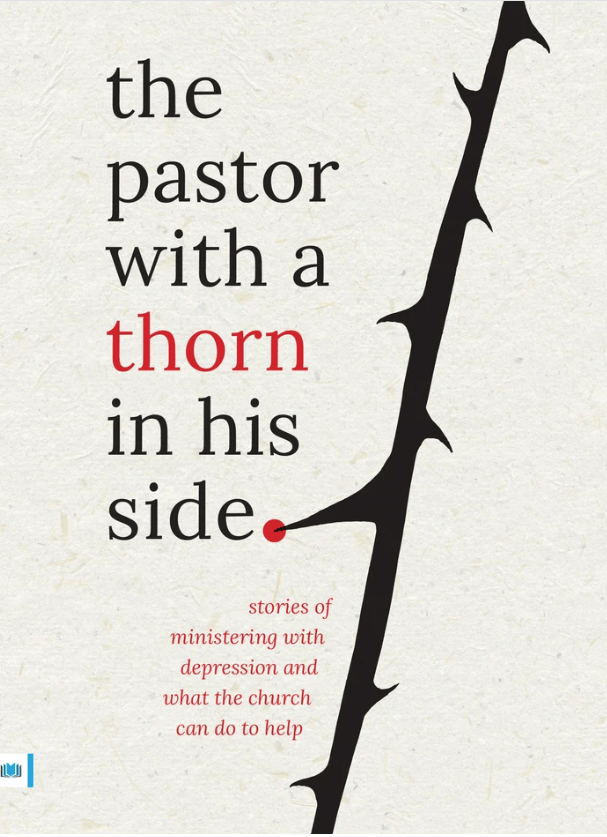
Since The Pastor with a thorn in his side was published back during the pandemic, we’ve had lots of feedback, most of it positive. At times though, the feedback was “we were looking for more.” I don’t think that’s necessarily bad, providing we understand it to be a recognition of the limits of a book and its scope, the expectation for some kind of development to the project. However, I was intrigued by one review that was a little different from the request for more theological commentary. Here it is from good reads:
“I’m not really sure what I expected from this but I don’t think it scratched my itch. The book features a number of accounts from pastors who have suffered from depression, and what helped and didn’t help as they navigated it. It felt like the bulk of each chapter focused on these latter parts, the treatment and recovery with comments on what did / didn’t help along the way. I think I would have preferred more of a focus on the lived experience of these pastors as they battled with depression, to understand in greater detail the impact it had on their thoughts/lives/ministry better. If there was anything to add to the book it would definitely be to flesh out those sections (but I understand the personal nature of these accounts and the contributors not wanting to share too much).
Notwithstanding it had some helpful things to say on helping people with depression and some of the warning signs to look out for if someone is heading towards that trajectory.
Now, there’s a risk of becoming the person who jumps on a review and argues with it. Don’t worry, I’m not going to become that person and the book is a good few years old now. However, I thought it might be helpful to share a few reflections in response and I know I can speak for all contributors to the book when placing my comments in the context that we are grateful for all feedback and don’t think we have written the perfect book. Further, I want to focus in on some different aspects to the scope and constraints of a book, though obviously it does bear saying that each of us had a word count limit and also that a central aim of the book was to share about the things the reviewer picks up on in terms of “what helped and didn’t help”, namely, to help churches better support their pastors.
I believe that testimony, giving people the space to tell their own story in their own words is pretty powerful. There are three aspects to this. The first is that good testimony points to Jesus and God’s work in our lives. It can be, done well, an excellent way of glorifying God and enjoying him forever.
Secondly, testimony is often helpful to the person telling the story. We should not overlook this. There’s the cathartic effect of simply being able to bring something into the open and get it off your chest. A burden is lifted. However, Christian testimony is more than just that kind of therapy. It is a way of telling the story in a way that constrains us to tell others and so tell ourselves the truth about God, creation, ourselves and new creation. In that respect, testimony can be a helpful contribution to the reordering of our minds and lives.
Thirdly, testimony can be helpful to others, both those who are going through the same thing as it communicates empathy and gives permission for them to tell their own stories. It also helps others to learn about the issues people face and as they grow in their understanding to know how to look out for dangers and to be empathetic too.
Fourthly, testimony as story is important because if we are going to do the interpretation and application, we first of all need to get as clear a picture as possible, Telling stories enables us to build up that picture, to understand what is happening. That’s one reason why I believe that a future project responding to the appetite for further application and theological refection will first of all need to collect more stories, stories from wives, children, parents, fellow elders, those in different types of ministry role etc.
At the same time, we need to be alert to some of the limitations to testimony. I think that those of us writing exercised some restraint not just because of the word count constraints but because of these limitations. One particular limitation is that interest in testimony can develop into a more morbid curiosity. We did not want to attract the kind of reader who is almost entertained by reading sad stories. I don’t think the reviewer here was falling into that trap, I take his interest to be a genuine desire to learn more in order to help others or maybe because he was seeking help for himself.
However, the danger can be there, and it can manifest itself in a few ways. We can put people on pedestals and turn them into heroes. Or we can sit in judgement like Romans at the circus, watching the gladiators, wanting their pound of flesh. Does their testimony get a thumbs up or a thumbs down. There is something weird about having part of your testimony in print, you get to see the scores that reviewers give. I’m of course treating any five star reviews as being driven by my chapter and blaming Steve, the editor for any lower scores! And, yes, there is something discomforting about seeing a rating out of 5 attached to your decision to share openly. Mind you there’s also something discomforting to finding out that people bought copies to give away as Christmas presents. To be fair, I know my mum did this because she thought it would be genuinely helpful to people.
Another limitation is that we are constrained in telling our story because we still don’t know the full story. I suspect if you were to ask the seven of us to write our chapters again, half a decade on, they would be different. The story has progressed. Some writers will have endured an ongoing struggle with depression experiencing regular bouts, others will have found that it doesn’t completely go away but it is now manageable, some may have seemingly experienced it as a one off episode before bounding back whilst others will consider themselves relatively depression free whilst aware of where their frailties are and being alert to the possibility that it might come back or maybe already has once or twice.
Thirdly., I think we must remember that there were more than just our stories in there. You see, with a depressed pastor comes potentially, a wife, children, parents, friends, fellow leaders and the congregation. Each of them has their own story that connects to the pastor’s story. We wanted to be careful that we did not begin telling other people’s stories especially where that might open up their own wounds.
I think there are some helpful lessons here, not just for how we engage with depression but wider considerations or testimony, especially about suffering. We want to encourage people to tell their stories, honestly and as fully as possible. However, that does not require exhaustive telling and we should be paying attention both to how we protect the person telling their story and those in the story with their own testimonies.

