Some news on something I’m doing a little work on. Have a read below. 1. I’d be interested in hearing from people who would like to share their stories 2. I’d like to see if there’s interest in the bigger/deeper follow up project to develop a more sustained theological reflection
A few years ago, I contributed to a book called “The Pastor with a thorn in his side” edited by my friend Steve Kneale. It brought together the stories of seven pastors who had experienced depression in ministry with Steve additionally supplying an introduction and conclusion pulling everything together.
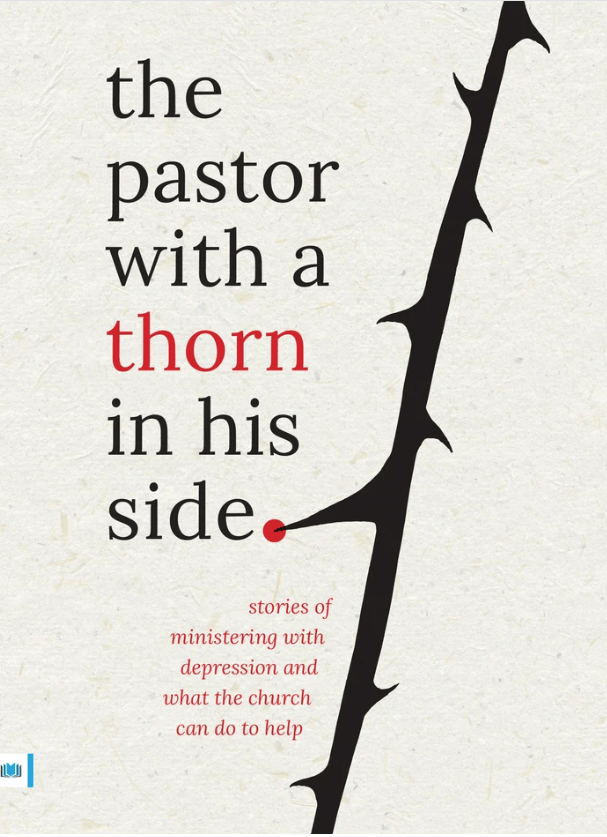
A major part of the reason for telling the stories was to attempt to break a taboo that seems to exist around mental health in the church. First, we wanted to encourage others in Christian leadership to share their stories, we wanted them to know that it is okay to acknowledge weakness around mental health. We are not meant to be superhuman, and mental illness is not evidence of some ministry disqualifying sin or a lack of faith.
Furthermore, we hoped that this would help lift the taboo in wider church life. If leaders and pastors can talk about their own mental health struggles, then that should hopefully mean that it is okay for other Christians both to know that it is okay to talk about them and even to consider the possibility that they could talk to their pastor who might even empathise with them from experience,
The book got very favourable reviews. However, one theme came up, readers seemed to be looking for more. Specifically they were looking for more in terms of further pastoral and theological refection on the issues raised in the different stories. Now, the reality was that this was well out of the scope of the book. The publisher took a risk in picking up the subject as a small publisher and working to the length it did. I don’t think we could have reasonably pushed for a longer book.
Further, I think that regardless of length, there was something needed anyway. I am increasingly convinced that we need to slow down when it comes to everything from preaching preparation, through feedback to pastoral care. We can move quickly from gathering information, building a picture and telling the story to analysis, interpretation and application. In this case, the book enabled us to slow down and start to tell the stories to help build a picture. Even still, I would argue that the picture is incomplete. It just contains seven stories from within the Reformed/Conservative Evangelical World of male church pastors. However, there are other stories that haven’t been told yet. There are the stories of the wives and families of those men, there are the stories of the leadership teams who serve alongside them, then there are the stories of other church leaders, female members of staff teams, youth and children’s workers, church operations managers, lay leaders etc and their experience of mental health. There’s still much work to be done in telling those stories. And indeed, if we want proper theological reflection, then we also need the stories of those who are not in, never have been and never desire to be in church leadership.
However, whether or not such a broader project is undertaken to tell the big story of Evangelical experience of mental health, I think that there is a place for a follow on or sequel to The Pastor with a thorn in his side, a volume that creates space for further theological reflection. Over the past couple of years, I’ve been working on further essays and reflections to try and develop our thinking. I’m planning a little free pdf volume here pulling together those articles into one place. I don’t think this counts as “the sequel,” It’s a collection of essays that shows development of thought over time, there are gaps and there are areas where I would want to see engagement with current scholarship including theological and psychological. However, I hope that gathering the essays together, I am providing a resource that will be helpful and prompt consideration of the further, deeper, larger project that I believe we need.


