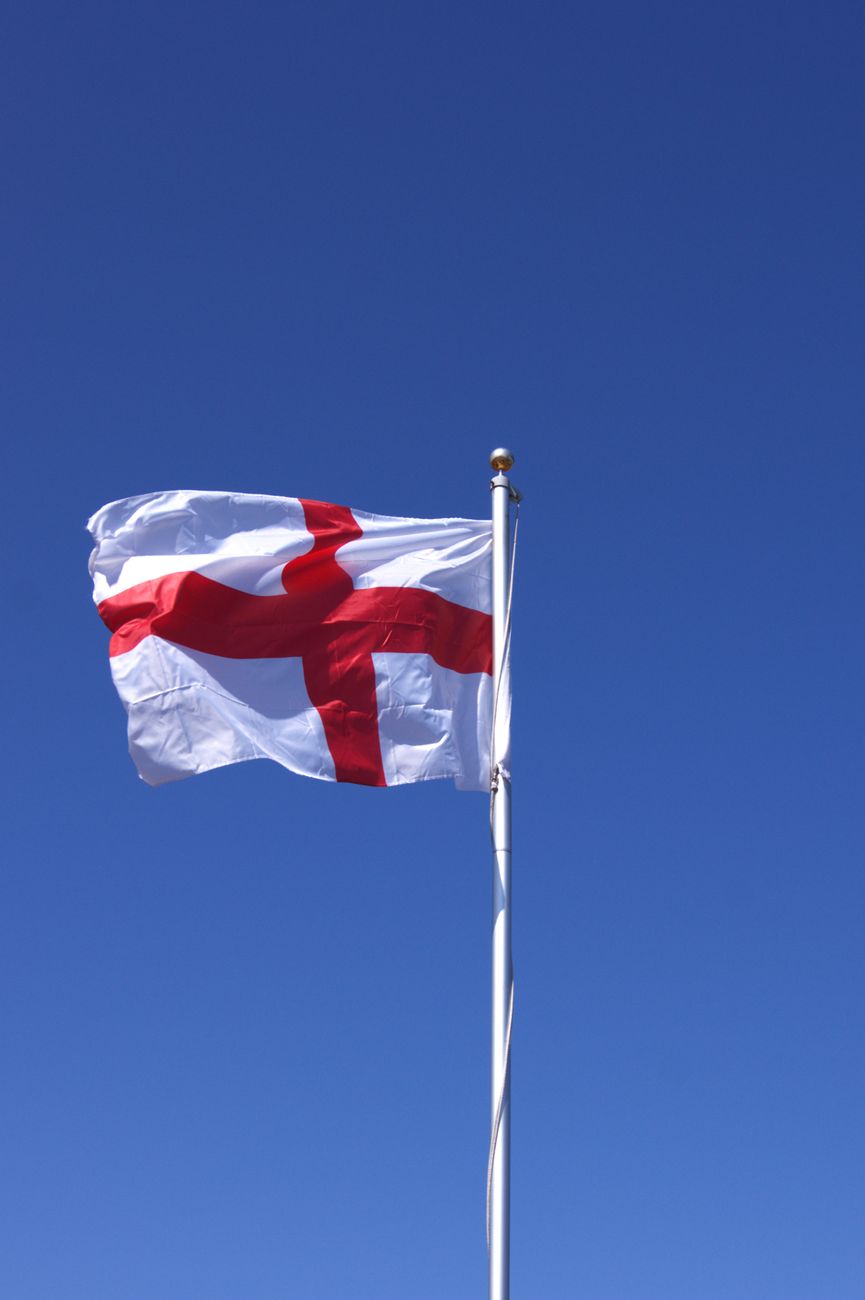
The age-old debate about English identity was kicked off again recently by Suella Braverman, a former Conservative Home Secretary and now of Reform UK. Braverman suggested that whilst she was born in Harrow and could reasonably be defined as British, she would never really be English because of her Asian heritage. The question is what makes someone English? Is it our DNA, the ability to prove linear descent or is it something more civic and cultural.
The question fascinates me because how you answer it affects my own identity. If you were to look at me, you would most likely identify me as English. I’m white, speak with a softened, Yorkshire accent and hail from Bradford, case closed. However, not so fast. What if I told you that my maternal grandpa was born in Belfast and my mum’s maiden=name was Magee? Well, at least, there’s my dad’s side, unless that is, that Williams makes me Welsh. However, the name Williams was chosen by my Great Grandfather, presumably about the time that he moved to Birmingham, leaving Luigi Guilliani behind with the Italian community of Clerkenwell. There also seems to be German heritage coming through my dad’s side of the family. The thing is, my name, skin colour and accent means that someone with brown skin, I’m never challenged or questioned. My identity is assumed. Whether intended or not, the heritage test discriminates against people based on the colour of their skin.
One variant of the argument suggests that we can consider people as part of a national identity by the third generation. This is based on Deuteronomy 23:8. This modification still has fundamental flaws. First of all the issue is still there. Someone like me would not have to prove that I’m at least third generation because my skin colour blends in. Others would.
Furthermore it rather rips a verse out of its context to make a point that it has nothing to do with. Deuteronomy 23 is to do with Israel’s relationship as God’s covenant people around. There were nations who would be excluded from generation to generation.because of their wicked opposition to God’a people in the wilderness. Eden and Egypt are treated differently There remains caution, a need to wait until the third generation. I’m not convinced this is literal but may reflect the idea of teaching your children and your children’s children and so to the sense of a clean break from idolatry, a generational shift to following the Lord. The crucial point is that this was not about citizenship in any state but specifically about full identity as part of God’s people. Thst identify and belonging is now opened up to all regardless of ethnic group or generations. It is through Christ”s shed blood.
And there is another clue, Moabite descendents are excluded even to the tenth generation. If we treat this as being a literal requirement for citizenship. Given that Ruth was a Moabite and within three generations, her descendants were on the throne, not waiting to the tenth, that perhaps gives us some feel for how to read the chapter.
There’s another problem with the heritage approach; it risks chasing down some mythical English ancestors just as there were attempts in 1930s Germany to identify some mythical Aryan ancestry. The reality is that even the most English of us are a mix of Celt, Anglo-Saxon, Norse and French. And of course, none of those groups of people were truly native to this land.
So, what about the civic-cultural test? Well, that might seem more promising. Can we identify as English because of our commitment to being citizens here, loyalty to the country and shared customs? There can be problems her too. Remember Norman Tebbit’s cricket test? Well, what about those of us who don’t even like cricket enough to care how the national team do. At this rate, I might struggle to pass the Yorkshire test too. However, I think there is something in this approach providing it doesn’t become too narrow and prescriptive. Truth be told, if there is anything specific to English identity it’s the ability to survive and flourish by adapting, adopting and assimilating. From accents and dialects to sporting accents, this has always been a wide and diverse culture. Perhaps English culture might work providing we stick to that and don’t try to narrow Englishness down into a tribal, political identity.
Which leads me on to an important point for Christians. One of the things I’ve picked up on in the recent debates about asylum and migration is that along with that mythical pure English DNA, there is a tendency to try and identify “the good immigrant”. So, we think of those, especially people we know personally, who don’t fit the current stereotypes, they didn’t come here on boats, they have no outstanding accusations of criminality against them. They get on as model citizens; they seem to love and respect the culture. We declare them welcome and at least British if not English. This enables us to insist that our Christian Nationalism is not ethno-nationalism.
What we see here is the reason why I prefer to talk in terms of ethno-cultural nationalism. This kind of nationalism welcomes the foreigner providing they are willing to accept our culture and know their rightful place in its hierarchy.
The irony is that before swallowing that argument, we need to remember that in many ways, Christians are not, and have not for a long time been, considered model citizens. We have a loyalty to a different kingdom, we have different values, we even have our own language. We are “aliens and strangers”.
So before we leap in to insist that people conform to a particular English identy or meet specific tests, perhaps we should consider where our citizenship is and whether or not anyone would question that.

