
Graham Shearer asks “Is the Trinity a united family?” He goes on to say that Evangelistic materials are increasingly talking about the Triune God which he sees as a good thing. However, his concern is that the way the Trinity is described falls short. He offers a specific example:
“A few years ago, when teaching on the doctrine for my church, I came across an evangelistic course which stated that “God is a united family”, “a loving community” and that the three persons “together form the one God.” This kind of explanation has become an increasingly prevalent way of thinking about the Trinity. “
He sees this as a significant concern:
“precisely because the triune nature of God is foundational, it is important to make sure we are being accurate and faithful in the way we think about it and express it. A mistake made in the foundations can lead to the whole building collapsing in the future.”
He argues that the particular description is problematic because
- It “lacks fidelity to Scripture.” In other words, we don’t find this kind of teaching about God in the Bible.
- It “risks robbing the persons [of the Trinity] of their deity.”
- It “risks making God less relational.”
- “The Biblical God is incomprehensible”.
Now, these are serious claims to argue. So, it would seem reasonable to me that if people are going to make that kind of serious charge (it gets very close to accusing others of heresy), and if Christian magazines and journals are going to publish them, then it is essential to provide citations of the claims.
When I asked via social media if anyone could identify the courses and publications that the author was referring to, a few people through in suggestions. It’s worth noting that no-one could confidently say which materials Shearer had specifically in mind. This helps us to think about why proper citation is vital.
- A serious charge has been made. It is reasonable that those subject to the charge are given the opportunity to defend themselves.
- We shouldn’t create an atmosphere where people find themselves under suspicion when the author doesn’t have them in mind. We end up with a culture that feels all too gossipy.
- If there genuinely is a serious problem, then we need to be forewarned properly so that we don’t end up using harmful teaching material out of ignorance.
- Unfortunately, far too often, we have found that contemporary authors are not accurately representing what others are saying. It’s therefore crucial that we are able to check out the sources for ourselves.
When I asked “does anyone know where the quotes are from”, I got a few replies along the lines of “it could be x but possibly not because of ….” then “maybe it’s y …” Eventually, a friend, Adam Thomas with some nifty google search work found this, it’s from “Essentials” by Lee McMunn.
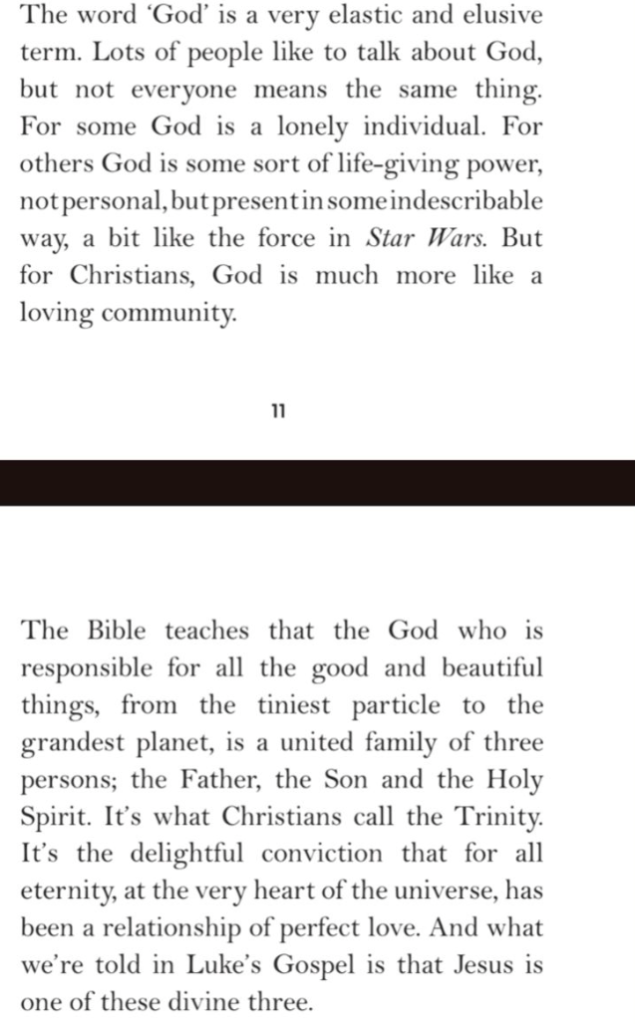
The question about whether or not we refer to God as a “united family” or such like is worth further discussion. Personally , I probably wouldn’t use that exact phrase, though I think that there are more grounds for using familial type language than Shearer suggests and will address that in a future article.
In the meantime, I would simply reiterate my plea that people would as a bare minimum cite claims and quotes to enable us to check them out for ourselves.
 Faithroots