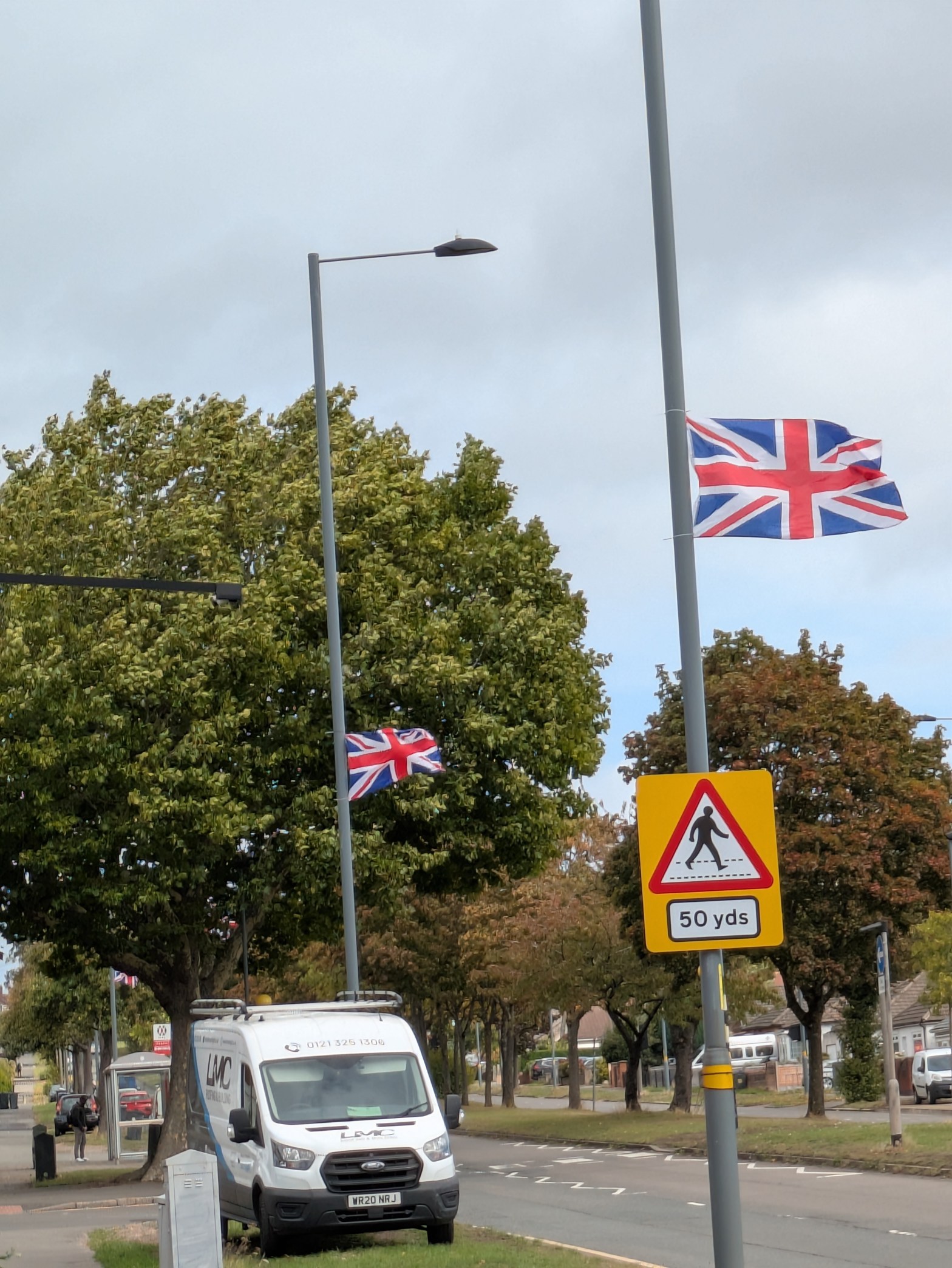
Andrew Wilson wrote recently on Think Theology about what the flags going up around the country, represent and mean. I think this was a helpful question to start asking and highlighted the challenges of interpreting signs and symbols. I am not convinced that this follow up article by Matthew Hosier was so helpful. Steve Kneale has engaged with it here.
I also have written personally to Think Theology with some feedback. I thought it would be helpful to share a slightly expanded version of that here.
1. Yes we have to consider the challenge about whether we like or more importantly love people. The part of Birmingham where the flags are is one of the least reached. Living near to hard places in Birmingham is not the same as living in them. There are two church plants in similarly tough places in Birmngham very close to Woeley Castle, so I’m not saying it’s the case with Matt’s source but it’s possible to be in a very middle class area right next to a council estate. I will keep repeating that to get beyond questions of liking, to actively loving, we need to actually be living among and planting churches among people rather than just presuming to comment in on what we think they think and feel, whether that’s done in an affirming or criticizing manner
2. We need a further distinction. We can understand fears without having to immediately say they are legitimate. Some of the fears on the list are real fears but not based on truth. Not everyone shares the same fears. And that means, we need to be careful that we don’t co-opt other fears or grievances onto those of the group of people we are trying to understand. In this case, we might ask whether working class/council estate people might have fears and grievances relating to immigration. The answer is that yes, many do. That doesn’t necessarily mean that they see Tommy Robinson as the solution. We also need to be clear that this doesn’t mean the fears are legitimate in the sense of based on truth. A lot of the fears about asylum are manipulated, hyped up and not based on hard evidence, or in fact contradict it. In Birmingham, we are frustrated and angry at bin strikes but I am concerned that there hasn’t been much Christian interest in the implications of a bankrupt council and uncollected rubbish until co-opted into the bin strikes situation. We also need to recognise that concerns about these things do not mean that working class/estate people are concerned about freedom of speech, gender and sexuality ethics, abortion, euthanasia or indeed the situation in Israel and Gaza. We need to be very careful that we don’t just impose our agendas onto theirs.
3. It is deeply frustrating at this stage to hear people shifting the conversation back to “but do you like them?”. On a personal level I have spent the past few weeks trying to talk about an underlying ideology and getting a refusal from people to engage that. This feels like quite the red herring. What it amounts to is ad-hominem. Instead of addressing the concern about ideology we get “oh you don’t like people.”. I grew up in South Bradford, I lived in a council estate in the West Middle fir 10 years. We are now in a working class private owned housing cluster in among the estates of North Brum. These are my people.
4. Which brings me to a crucial point. The evidence points to it not being local residents putting up flags. It’s organized. It’s one or two people or gangs, it’s sometimes over night. And it comes with a Northern Ireland undertone of “conform or else.” So, when we talk about recognising the fears of others, we need to be careful about what we mean by this. We should not conflate council estate residents with those putting up flags. We need to recognise that those people may also be afraid of the flag reams, especially when it isn’t just about putting up flags on lamp posts but also about vandalism. THere is also a thin line between recognising both sets of grievances and victim blaming. If, as sadly and horrifically happens, someone pouts dog poo or even human feces through a letter box, do we prioritise the supposedly legitimate fears and grievances of the person doing it?
Matthew is right to challenge us on heart motives and to encourage us to consider the fears, concerns and hopes that lie behind recent events but we also need to be careful that this doesn’t become a red herring distracting us from the root issue.
 Faithroots