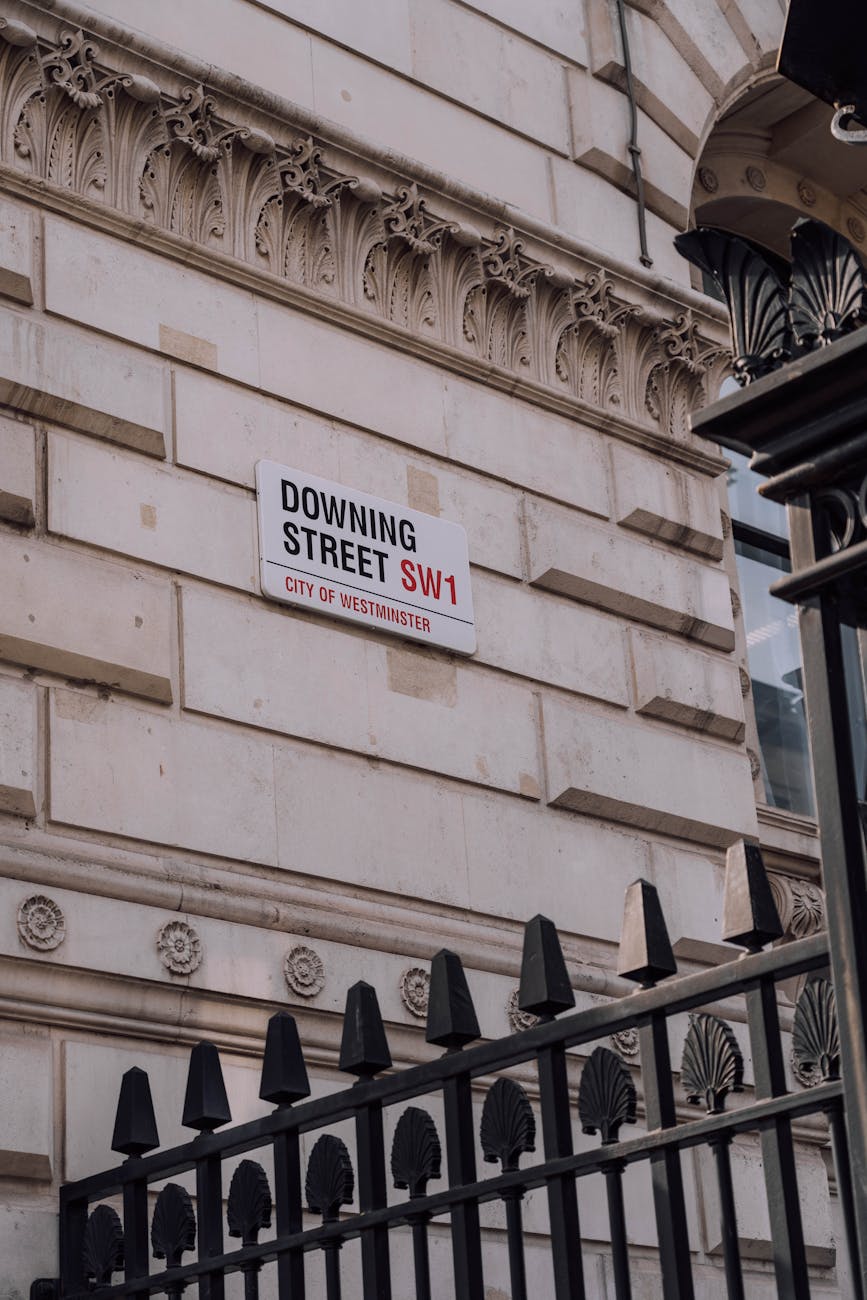
I’m still following the Peter Mandelson vetting case. I suspect that as we move into committee hearings and debates about process that we have moved beyond where most people’s interest in the subject lies, beyond political anoraks. However, I still think that there is benefit to us pursuing the case a bit further. There are two things to consider here. First, what can we as Christians and church leaders learn from such situations and secondly, without being party political, we want to think about how we respond as believers to what is going on in public life.
I hope to think a bit more about those issues in future posts. I thought what it might be helpful to do today is to try and set out what we know and where we are.
First of all, we already knew that Peter Mandelson had been dismissed on two occasions from government and that this related to business dealings. Secondly, we knew that he had friendship with Jeffrey Epstein. The Prime Minister has insisted that he did not know the extend of this at the time that Mandelson was appointed.
Secondly, we found out last week that there had been issues with the vetting process. The UK Security Vetting service had not given the all clear for Mandelson’s appointment. However, the Foreign Office (FCDO) decided to still go ahead with the appointment. We know that the Prime Minister found out on Tuesday, that if there has been an inadvertent misleading of the House of Commons then the minister responsible should correct the record at the earliest opportunity. The Prime Minister did not do this but waited until Monday to address the House. However, on Thursday, he required the Permanent Secretary’s resignation.
On Monday, the Prime Minister made his statement to the House. Kemi Badenoch responded as follows:
“I thank the Prime Minister for advance sight of his statement. His reputation is at stake, and everyone is watching, so it is finally time for the truth.
Earlier today, Downing Street admitted that the Prime Minister inadvertently misled the House. The Prime Minister has chosen not to repeat that from the Dispatch Box. I remind him that, under the ministerial code, he has a duty to correct the record at the earliest opportunity. The Prime Minister says he only found out on Tuesday that Peter Mandelson failed the security vetting. The earliest opportunity to correct the record was Prime Minister’s questions on Wednesday, almost a week ago. This is a breach of the ministerial code. Under that code, he is bound to be as open as possible with Parliament and the public in answering questions today, so let me start with what we do know.
We know the Prime Minister personally appointed Peter Mandelson to be our ambassador to the United States. We know that Mandelson had a close relationship with a convicted paedophile. We know that he had concerning links with Russia and China—links that had already raised red flags. We know that the Prime Minister announced the appointment before vetting was complete—an extraordinary and unprecedented step for the role of US ambassador.
The Prime Minister says that it was “usual” because it was a political appointment, so I remind him, and the rest of the Labour Front Bench who are heckling, that Peter Mandelson was a politician who had been sacked twice from Government for lying. That meant he should have gone through the full security process. We also know that when Peter Mandelson failed the security vetting, he was allowed to continue in the role with access to top secret intelligence and security information. This goes beyond propriety and ethics; this is a matter of national security.
Let me turn to what we do not know. We still do not know exactly why Peter Mandelson failed that vetting. We do not know what risks our country was exposed to. We do not know how it is possible that the Prime Minister said repeatedly that this was a failure of vetting, went on television and said things that were blatantly incorrect, and not a single adviser or official told him that what he was saying was not true. At every turn, with every explanation, the Government story has become murkier and more contradictory. It is time for the truth.
There are too many questions to ask in the allotted time, so I will ask the Prime Minister just six. I have taken the unprecedented step of providing these questions to the Prime Minister in advance, so he has them in front of him. I have asked for these questions to be put online for the public. They and I expect him to answer.
The Prime Minister appointed a national security risk to our most sensitive diplomatic post. Let us look at how this happened. The right hon. and learned Gentleman told me at PMQs in September 2025 that full due process was followed”—[Official Report, 10 September 2025; Vol. 772, c. 859.]
in this appointment. We now know that in November 2024, Lord Case, the then Cabinet Secretary, told him that this process required security vetting to be done before the appointment. He did not mention any of what Lord Case said in his statement earlier. First, does the Prime Minister accept that when he said on the Floor of the House that “full due process was followed”, that was not true?
Secondly, on 11 September last year, journalists asked his director of communications if it was true that Mandelson had failed security vetting. These allegations were on the front page of a national newspaper, and yet No. 10 did not deny the story—why?
Thirdly, will the Prime Minister repeat at the Dispatch Box his words from last week: that no one in No. 10 was aware before Tuesday that Mandelson had failed his vetting?
Fourthly, the Prime Minister says he is furious that he was not told the recommendations of the vetting, yet on 16 September, a Foreign Office Minister told Parliament that
“the national security vetting process is rightly independent of Ministers, who are not informed of any findings other than the final outcome.”—[Official Report, 16 September 2025; Vol. 772, c. 1387.]
That was the Government’s stated process, so why is the Prime Minister so furious that it was followed?
Fifthly, on 4 February 2026, the Prime Minister told me from the Dispatch Box that the security vetting that Mandelson had received had revealed his relationship with Epstein. How could the Prime Minister say that if he had not seen the security vetting?
Finally, Sistema is a Russian defence company that is closely linked to the Kremlin and Vladimir Putin’s war machine. Was the Prime Minister aware before the appointment that Peter Mandelson had remained a director of that company long after Russia’s invasion of Crimea?
Everyone makes mistakes. It is how a leader faces up to those mistakes that shows their character. Instead of taking responsibility for the decisions he made, the Prime Minister has thrown his staff and his officials under the bus. This is a man who once said,
“I will carry the can for mistakes of any organisation I lead.”
Instead, he has sacked his Cabinet Secretary, he has sacked his director of communications, he has sacked his chief of staff, and he has now sacked the permanent secretary of the Foreign Office. All those people were fired for a decision that he made.
The right hon. and learned Gentleman’s defence is that he, a former Director of Public Prosecutions, is so lacking in curiosity that he chose to ask no questions about the vetting process, no questions about Mandelson’s relationship with Epstein and no questions about the security risk that Mandelson posed. Apparently, he did not even speak to Peter Mandelson before his appointment. It does not appear that he asked any questions at all. Why? Because he did not want to know. He had taken the risk and chosen his man, and Whitehall had to follow.
It is the duty of the Prime Minister to ensure that he is telling the truth—or does the ministerial code not apply to him? I am only holding the Prime Minister to the same standard to which he held others. On 26 January 2022, he said from this Dispatch Box to a previous Prime Minister:
“If he misled Parliament, he must resign.”—[Official Report, 26 January 2022; Vol. 707, c. 994.]
Does he stand by those words, or is there one rule for him and another for everyone else?
The Prime Minister responded as follows:
Let me respond to those points. First, when I found out what had happened on Tuesday evening last, I wanted to have answers to the questions of who had made the decision to give clearance on developed vetting contrary to the advice, why that was done, and who knew about it, so that I could provide the information to the House. That is the exercise that has been conducted since Tuesday evening, so that I could come here today to give the full account to the House, which I have just set out.
The right hon. Lady asks me about developed vetting security clearance after the appointment. What I set out was not my words; I read out the evidence of the former permanent secretary and the former Cabinet Secretary in relation to that. I think the quotes that I have given the House are clear enough.
The right hon. Lady asks why Peter Mandelson failed. It is important to make a distinction between the information provided to the review and the recommendation. The information in the review must be, and has been, protected—otherwise, the integrity of the entire system would fall away—but the recommendation does not have to be, and should not have been, protected.
In relation to the answer about full due process, that was the information that I had and which I put before the House, and it was confirmed to me by Sir Chris Wormald. In September, I asked him to conduct a review of the process to assure me that the process was correctly carried out. He did that and wrote to me on 16 September to give me his conclusions. In relation to reports in the media, No. 10 was repeatedly asked about the facts surrounding Peter Mandelson’s clearance, and was assured that the proper process was followed in that case.
In relation to those in No. 10, let me give the answer. Nobody in No. 10 was informed about UKSV’s recommendation. To be clear, and for the record, the Cabinet Office permanent secretary received information recently, and then sought the necessary and legal advice. Once those checks were completed by the Cabinet Office permanent secretary, I was told. That is in the last two weeks or so, and that was entirely the right procedure—to get the legal advice, and then to bring it to my attention at the first opportunity. The right procedure was followed by my officials in the last few weeks.
In relation to why I was furious about the process, it was for the very reason that I strongly believe I should have been given this information at the very outset. I strongly believe there were repeated times when I should have been told. I should have been told on appointment, and I should have been told when Peter Mandelson was sacked. The Cabinet Secretary should have been told when he reviewed the process. The Foreign Secretary should have been told before she was asked to sign a statement to the Select Committee, and I should have been told when I ordered a review of vetting.
In relation to the point that the right hon. Member for North West Essex (Mrs Badenoch) makes about what I said in February, in answer to a question of hers, I make it very clear that I had not seen the security vetting file. I did not know that UKSV—[Interruption.] The question asked was about vetting. I knew about the due diligence, which is why I put before the House what I knew about the due diligence in relation to Epstein. I told the House what the due diligence had said. I did not tell it what security vetting had said, because I had not seen the file in relation to that. As for the particular details on Peter Mandelson, I acted on all the information I had available to me. The simple fact of the matter is that I should have had more information; I did not have that information. The House should have had that information, and I have now set it out in full to the House.
Readers can judge for themselves the extent to which the Prime Minister satisfactorily answered questions.
Today, Sir Oliver Robbins appeared before the Foreign Affairs committee to answer questions. I made some notes as the committee hearing went along as follows.
Mandelson was already receiving briefings prior to vetting. The desire was that the appointment had to go through at pace. Robbins felt like there was at times a dismissive attitude towards the vetting process. The vetting process is not to determine fitness for post but to protect national security it was not a given that he should be vetted. The argument was that he was a member of the House of Lords and a Privy Councillor, so should not need vetting. The PM knew l the risks already. However, the FCDO insisted that vetting should happen. Nothing in communications about the post stated that it was subject to vetting.
His office were under constant pressure including frequent phone calls from private office to private office in other words, from the No 10 private office. He does not want to name officials because they would be under pressure from others in No 10. He doesn’t hold the permanent secretaries responsible.
The UKSV decision was given by UKSV verbally. The Government have published a document saying clearance denied. Robbins says he did not see such a form. Risks were explained but the vetting was not shown to him. UKSV treated things as recommendations not decisions. Robbins is clear that the UKSV do not fail people and that FCDO does not over rule UKSV. The Foreign office decide based on findings and their own assessment of risk.
He was told that UKSV were leaning towards recommending denial of clearance However was a border line case and FCDO thought that risks could be managed. The risks did not relate to Epstein. The risks were within normal parameters apart from the prominence of the process. The security vetting process because it is about risk management relies on a level of confidentiality and so what those risks were was not communicated further and Robbins still will not.
The Prime Minister was very angry that he had been deceived when the news about the Epstein links came out and this put Robbins in the difficult position of having to withdraw Robbins. Robbins declined to comment on the Prime Minister’s claim that he had sacked Robbins because he asked him why he had withheld information, was not satisfied with the answer and so sacked him.
I think there are a few things that we can highlight here. First, that Robbins believes that what he did was in line with due process, he followed the established methods. Secondly, that on two occasions, the Prime Minister has acted in anger when dismissing someone and the anger seems to be focused on that he was deceived. It is worth pausing there. It looks like Robbins is taking advice on whether his dismissal may have been unfair. So, there are questions about how events were handled last week. How different would things have been if the Prime Minister had swiftly let the House know last Wednesday that there were question marks about the vetting and so he needed to correct the record. He could then have established a process for investigating further. It may well be the case that individuals have acted correctly. Robbins seems to believe he did as do other civil servants. We may have been able to learn lessons. Instead we have a situation where it looks like people lose their jobs to protect the prime minister.
We also know that the security risks identified were distinct from the Epstein issues. We don’t know what they were. These seems to be a concern that explaining them outside of the process might put national security at risk. Part of that is understandable. The way the process works is that it relies on people to be open and transparent because the expectation is that risks will be managed. The UKSV are not the decision maker in the same way that the DBS service are not the decision maker on appointments they vet for. Instead, information is provided to decision makers.
I think we can highlight a number of concerns here. First, the process seems to be so boxed in that it makes it difficult to provide for transparency and for external checking. Secondly, there seems to be confusion as to who is the actual decision maker. Whose appointment was it? I suspect this partly relates to the fact that the process was designed for appointing career diplomats and civil servants, not politicians. If Starmer was merely expressing a preference for Mandelson then, fair enough. He might then say the process and risk information was nothing to do with him. However, all along, this looked like his personal appointment. Therefore, he should have been furnished with the relevant information. Without that, not only could he end up appointment people that he should not but it also enables the civil service to block appointments they don’t want without providing good reasons.
The Prime Minister likes to present himself as someone who is concerned about process and due diligence. Yet, what appears to be coming through is that he did not really know or understand the process that was being used to help him make a high profile appointment.
The Prime Minister either failed to ask questions about risks at the time and later about the process or he asked them and was not given answers. If the latter, then he should have explained that sooner to the Commons.
I have already picked up on some lessons about the need for curiosity in my previous post. A further lesson for church leaders at this stage is that it is important to have clear, robust, transparent systems and processes in place. It is also important that leaders know, understand and follow those processes. Additionally, I would add that when the system does not work whether because it was a poor process to start with or because it doesn’t fit changing circumstances, then the last thing you should do is keep pressing on with that process because it is what you have always done.

