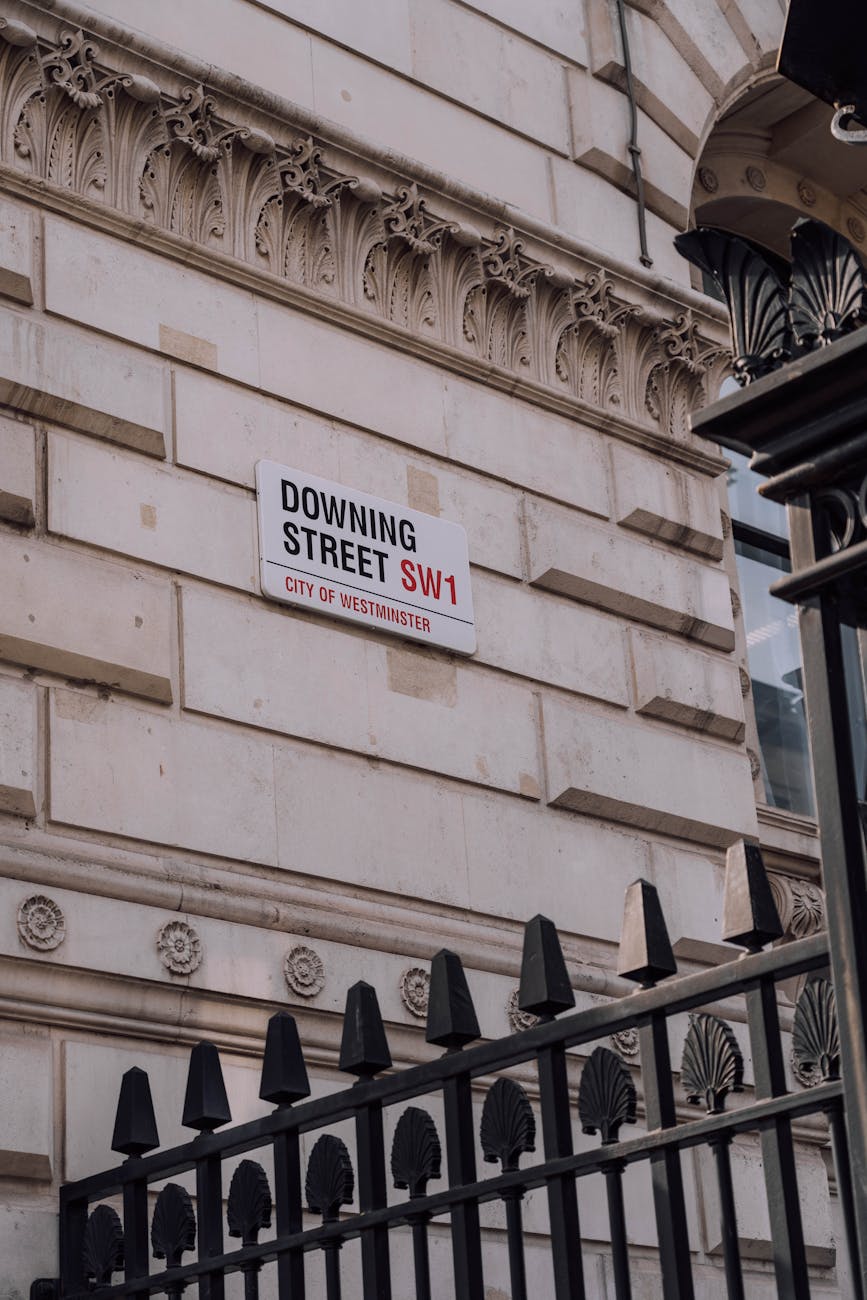
In this post we are going to think about why we as Christians and churches should be concerned about what has been happening in the controversy surrounding Peter Mandelson’s appointment at the ambassador to the US, his dismissal and the subsequent fall out.
First of all, it’s worth saying that there are ways in which we should not be interested, at least as churches. Specifically, if you have political alliances then it is tempting to watch and read the coverage through that filter. Labour supporters will therefore be watching with a level of grief and despair as they see their poll ratings tanking. Opponents, even including those who supported different factions within the Labour Party will no doubt feel a sense of vindication, it will have given then a boost to see the Government struggling, there may even be a certain sense of schadenfreude. Finally, some of us, perhaps a rare breed might be considered political anoraks, We are fascinated by all the machinations, the way that different people operate and how tribes and alliances form (for some of us it is a kind of anthropology, it’s about people watching), the potential impact on opinion polls and on policies, processes and systems too.
I’m not specifically saying that it is wrong to be interested in this kind of way, though some attitudes may be obsessive and unhealthy. For example, whatever my personal opinion of the Prime Minister (and I’m not a fan) or my political leanings, there was something excruciating about watching him seemingly fall to bits in full view of the public when giving his statement on Monday. It would be callous not to be concerned for him as a person and in terms of the national interest, I’m not sure it looks good for the country to see the head of government put through that. Note, I’m not arguing that it was unnecessary or shouldn’t have happened. I am saying that we should take no pleasure in it. Christians can have an interest in politics too, academically or in support of parties but it should not become all consuming. My point though is that those are not the concerns of the Church.
However, whilst the church is not party political and whilst church leaders will have their political leanings (I know pastors and elders who support Labour, the Conservatives etc), they are not party political as church leaders. However, there is a sense in which we are political. Again, this is not in the Christian Nationalist we are not called to try and establish a confessing state. Rather, we want to show how an overflow of common grace is for the good of our neighbours and we want to model an alternative society that lives God’s way.
So, here are three specific things that we should be concerned about. I would also want to make it clear that whilst we are focusing on this specific incident, governments of all shades have found themselves in similar situations in the past.
First of all, there is the obvious issue that Peter Mandelson clearly had longstanding links to Jeffrey Epstein. The whole way in which a powerful man was in a position to abuse and that other powerful men, if not directly complicit seemed happy to turn a blind eye, even after he was convicted. Similarly, those connections were known at the time of Mandelson’s appointment as were other deep concerns, the very issues that led to him being dismissed from government twice. Indeed, whilst the Epstein connections were not known when Mandelson was appointed EU Commissioner, his sackings from government were, as indeed they were when Gordon Brown appointed him back into his government. So it is not just that Keir Starmer showed a lack of judgement. Others in the past were happy to take a risk on Peter. Don’t forget either that opposition politicians only began to get vexed when they saw political hay to make. As Christians, we should have a concern to see those in power acting rightly and justly. We should want to see them show a greater concern to protect victims and we should challenge a culture that shows favouritism and finds jobs for the boys.
Secondly, there is the issue of truth telling. At various times there have been accusations of lying. Now, our political system has a convention that MPs treat each other as honourable people and so it is forbidden to accuse another MP of lying. Two MPs were kicked out of the House of Commons for doing just that on Monday. I think that part of the reasoning is that parliamentary privilege enables you to say things without fear of legal repercussions outside of the House. I think the solution to that would be that accusations should be tested and verified. If a person is found to bring a false accusation of lying then they should face consequences from Parliament.
Of course there have been denials too. There has been the question about whether or not the Prime Minister mislead the House of Commons. There is a reasonable assumption that even if he did so in ignorance, inadvertently, that he still did. Boris Johnson was famously accused of not just inadvertently but recklessly misleading. As Christians we believe that the truth matters and is to be treasured. This means that it is not to be controlled and manipulated. We should have no truck with spin. It also means that truth telling is about more than not wilfully lying. It is about being careful not to mislead. We want to see a society around us that values truth.
Thirdly, we have seen a number of people from number 10 staff to civil servants lose their jobs despite the Prime Minister previously insisting that leaders should take responsibility for what the team does. It was notable that Olly Robbins on Tuesday said that he had to be careful about what he said in relation to his own dismissal because he was taking advice. The implication is clear that he believes he has a case for either wrongful or unfair dismissal. I would combine this with something else. Some of the party political attack ads have treated the Epstein connection as a bit of a joke, an opportunity to cause trouble. This does not treat victims with respect, they simply are used again as pawns in political games. As Christians we want to see a society where people are treated with dignity as those made in God’s image and where victims are protected. We want to see a society where justice is not just seen to be done but is done.
So, those are three things we should be concerned about and talking about. Is there anything you would add?

