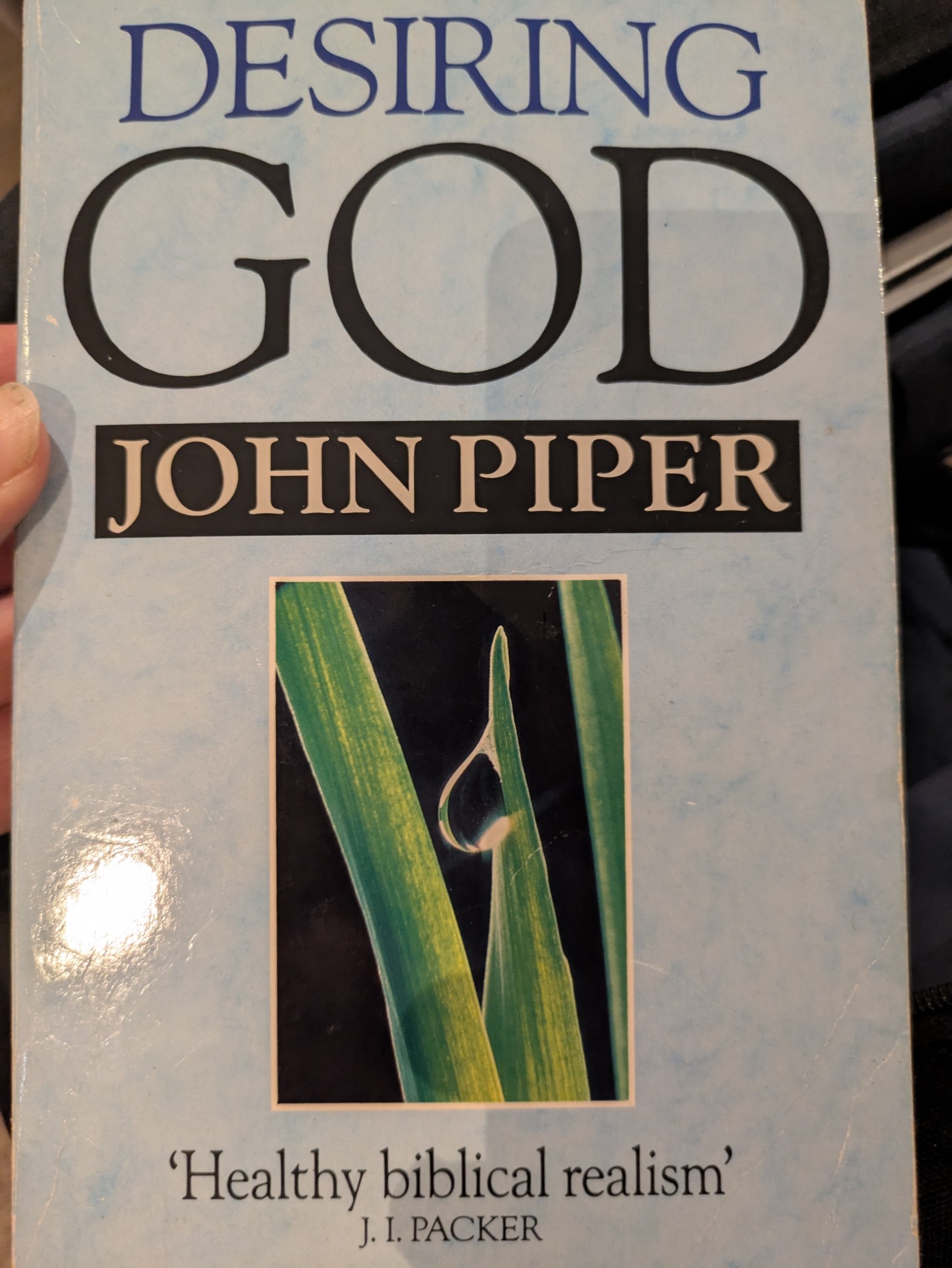
I was surprised to find out that “Desiring God” by john Piper is 40 years old this year. The idea of Christian hedonism as a term and Christian hedonists as an identifier, perhaps understandably never caught on and that’s also perhaps for the better. However, the shocking use of such language by Piper at the time was, I believe, necessary in order to shake reformed evangelicalism out of its sleep and rediscover joy filled worship and dependence upon God.
Piper tends to be more associated with his work on complementarianism and with the CBMW alongside Wayne Grudem these days. However, I believe that this work and other books ok future grace and the pleasures of God will remain his most important and best contribution to the church.
The shorter catechism question “What is the chief end of God” and it’s answer “to glorify God and enjoy him forever” seems to be ubiquitously quoted these days to the point where we might forget how revolutionary Piper’s teaching on this was in the 80s and 90s. Revolutionary of course in terms of its contemporary impact rather than in the sense that it was novel. Piper drew and continues to draw heavily on the puritans and particularly on Jonathan Edwards for his thought.
Indeed, that popular quoting of the catechism may risk masking the revolutionary nature of the teaching in Desiring God today, Piper’s specific emphasis was two-fold. First, he argued that “and” should be replaced with “by”. We glorify God BY enjoying him. This is what worship is. Indeed, we might reverse that to say that we enjoy God by glorifying him. We find joy in his overflowing goodness. Secondly, he insisted that not only do we “glorify god by enjoying him forever” but that God himself glorifies and enjoys himself. This is the thinking behind the further work on the pleasures of God and encourages us to better grasp the joyful character of God.

