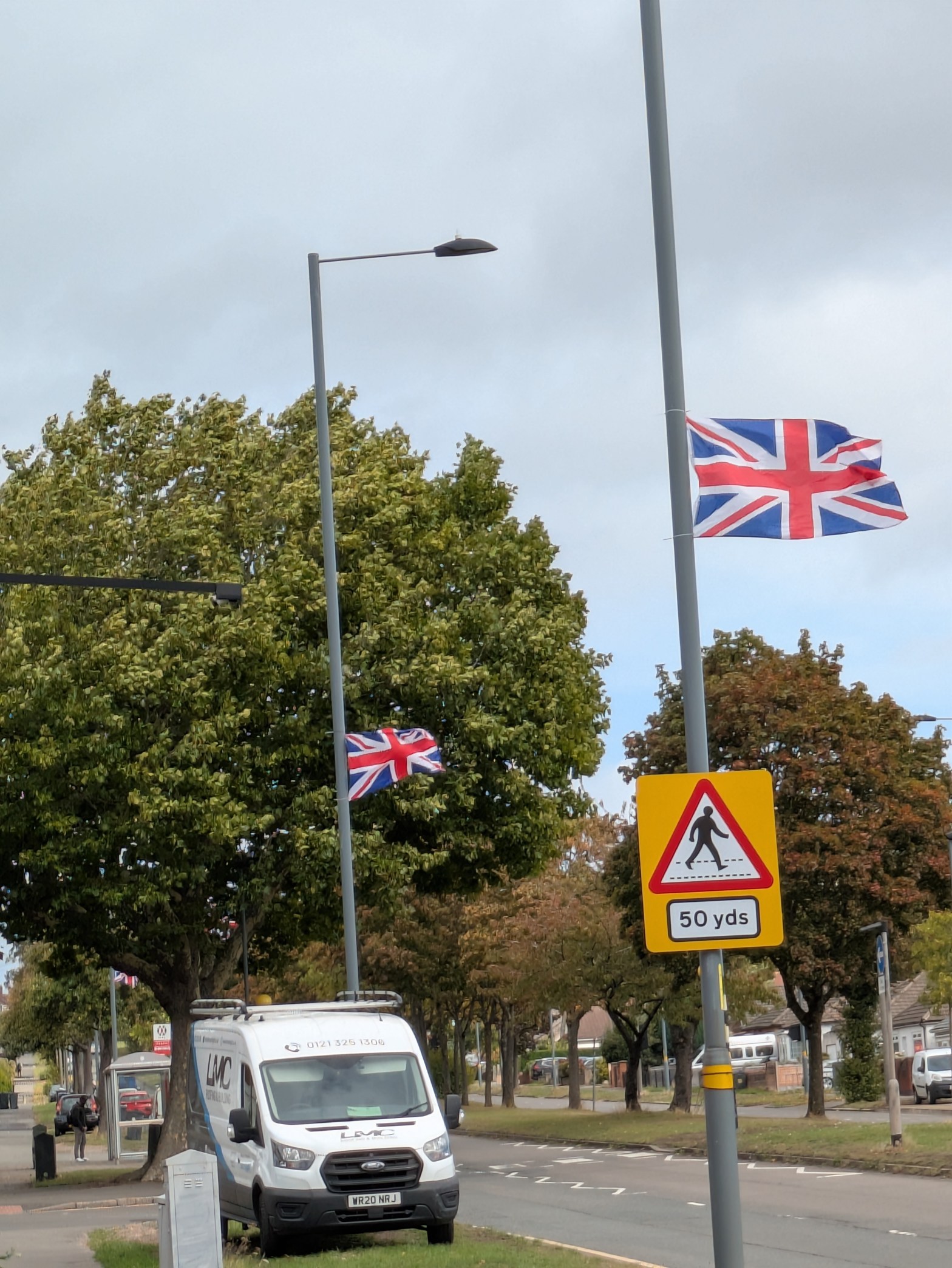
One of the things I’ve noticed about Christian responses to flags appearing on lamposts, protests outside asylum hostels and the big Unite the Kingdom rally is that there has been a struggle to find out voice and get to the heart of what the issue is.
There has been criticism of divisive and intimidating words and images as well as examples of violence. However, the push back has been that this means writing off participants as racist or criminal when protests were largely peaceful and when that means we don’t hear legitimate concerns.
Alongside this, there has been a tendency to describe everyone, from organisers to participants as “right wing” or “right leaning.” This does two things. First, it ties organisers and attendees together so that you can’t directly address an ideology without testing everyone. Secondly, it treats a whole lot of people who in fact have very, very different views as the same. For example, over my lifetime, I have leaned rightwards in my politics. By that, I’ve generally favoured low taxes, small government, strong defence etc. I also favour Brexit which can be both a left and right issue but broadly speaking I see Brexit in terms of creating opportunities for the things above. This means that although I might be classed as right wing I have next to nothing on common with those who organized the march.
And here is the crunch. I think that people are making these mistakes primarily because they don’t really get what the issue is that they are facing. To help us do this, I think we need to do better at naming and describing the particular ideology.
The kinds of words that we might use include “Far Right” and “fascist.”. Both terms on their own have their problems. “Far right” may suggest that they are on a continuum with the centre right., just a little bit extreme. I don’t think that’s the case. Margaret Thatcher may have been further right than John Major, Kemi Badenoch than David Cameron and Nigel Farage a little further still. It may be harder to see the differences as you go further on that spectrum because often there is a competition for support and some overlap in policies and rhetoric but the Far Right’s underpinning philosophy is a different beast to Conservatism whether the Thatcherite or Reform UK brand
People balk too at the use of “Fascism” because it has historical specific connotations and because definitions associate it with authoritarian dictatorship. It’s hard to see those protesting a lack of freedom as authoritarian. However, it might help us to see why the focus on one man and changing of his name might be a problem even if it replaces racist chants.
We may not be able therefore to give a one word name to what is going on. However, we can perhaps give a few. We might find it helpful to think in terms of a kind of ethnic nationalism that revolves around (perceived as) strong authoritarian and charismatic leadership.
It’s also important to understand how this functions because you might look at a march and think “how can it be ‘racist’ when people of colour were present and involved?”
The answer is two-fold. First, this kind of nationalism has historically dressed itself up not as trying to harm or destroy people because if their skin colour but to keep them in their place. In other words, you have Caucasian cultural supremacy and others are welcomed in on those terms and you have a place for other cultures but not within your national borders. It’s cultural nationalism first.
Secondly, there is a tactic we see at work which is not unique to the far right The point is that you recognise that the appeal of your core, pure ideology is limited, so you find an idea (like free speech) that has bigger appeal. You may not care too much about free speech as a principle but it suits you to have it. Then you draw a wider crowd. This both gives the appearance of weight behind your cause and it gives you a recruiting ground to draw others further in.
I believe that this is what we have been seeing happen increasingly over the past few months. Christian leaders, especially those seeking to be thought leaders need to become sharper, clearer and bolder in speaking up and challenging this ideology.
 Faithroots