Peter closes his first letter with an exhortation to elders to take their responsibility to provide godly leadership seriously (1 Peter 5:1-4) and for the church family to submit to the elders (1 Peter 5:5). Elsewhere, the Bible tells us to make it a joy and not a burden for our elders to lead and serve.
Why does it matter? Why is it important to have godly elders in the church and why does it matter that we treat them well, listen to them and pray for them? In this sermon I highlight why it matters by addressing elders and those considering being elders. However, don’t just take a nap and assume it’s not relevant if you are not an elder. This is stuff that you need to be over hearing too.
Elders, your calling is to provide for and protect God’s people
Paul is heading back to Jerusalem, not knowing what to expect there but he stops off at a place called Miletus and there arranges for the elders from the church at Ephesus to come and meet with him. The church has been significant in Paul’s ministry and in the wider life of the early church. He’d spent three years there. It seems to have been a place with influence on churches in the region. Timothy is placed there and later John will serve there too. Paul will write personal letters to Timothy instructing him on how to lead, including by appointing elders and he will also write a letter that seems to have been intended as a circular but with Ephesus as a starting point and included in that letter will be instructions for elders, or pastor teachers. Sadly for all the benefit of Paul, Timothy and John’s connection to the church, it was still sadly to lose its way, described as having lost its first love in Revelation (v17-27).
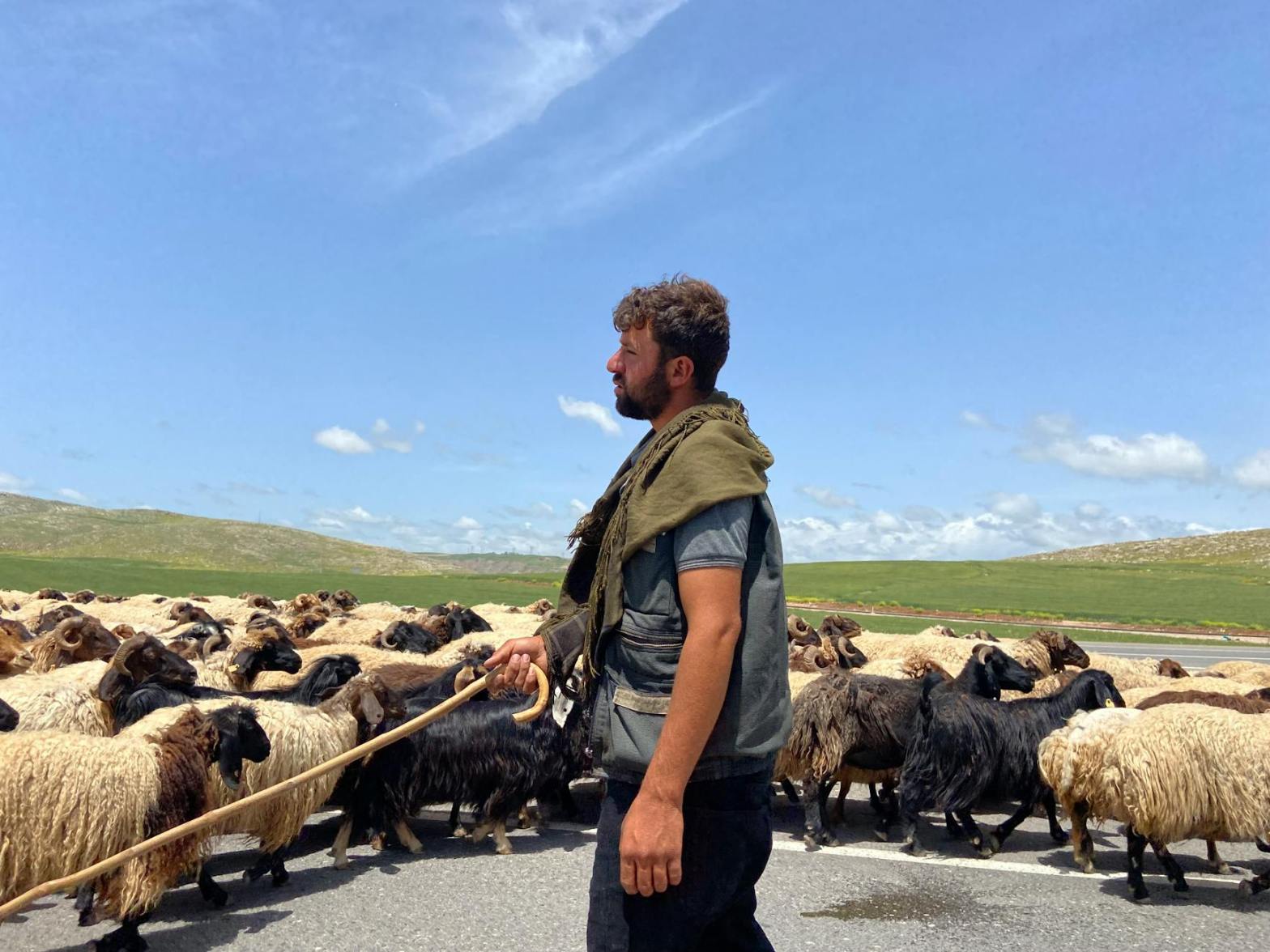
In these last words to those elders, Paul urges them to “keep watch” (v28) and to “be alert” (v31). They are to be shepherds. Shepherds are responsible for looking after and leading sheep. We tend to talk a lot about leadership these days in terms of strategies, vision and mission. There’s nothing wrong with those things but actually a shepherd only really leads for two reasons, first to lead the flock to pasture and second to lead them to shelter. It’s a providing and protecting role. So, Paul has already reminded them that he did not hold back “from declaring the whole counsel of God” and that’s what these shepherds are going to need to do.
Providing …. Hospitable and able to teach
In 1 Timothy 3 when Paul lists the qualifications of an elder, he only really includes two gifts among the list of character qualifications. Elders are to be hospitable and able to teach. I believe that these are closely connected. By the way, did you notice that it is the elder, not the wife who is required to be hospitable. We think of hospitality as about hosting dinner parties or having people round for social time in the evenings. But away from our safe, prosperous culture, hospitality was more serious and urgent, a matter of life and death. It was about making sure people had food and shelter in what could be a hostile world. So, you can see the connection with teaching and why it has to be the elder that has this gift and character trait. Elders are to make sure that God’s people are those whom the world of Christ dwells in richly.
2. Protect
(a) be alert
We can focus on the providing/feeding/pasturing bit and if we are honest, most of us will enjoy the more positive sides of church life, teaching, leading worship, spending time with people, evangelism, encouraging, praying for others etc but the watching and guarding comes harder. Paul says that we have to do this because there are wolves about. A wolf is a predator, it’s the opposite of the shepherd. Instead of feeding the sheep, it wants to eat them. Instead of wanting to protect, it wants to kill them.
Paul says that once he is no longer to warn and protect, then he sees that wolves will try to get in (v29) . Not only that, but some from among them will turn out to be wolves too (v30). That might mean that there are those hidden, like sleeper cells among God’s people, who never belonged and never were concerned for God and his people, they were biding their time. It also means, and this is the scary thing, that there might be those who genuinely thought they belonged and were serving God and loving his people but either were deceiving themselves or something changed. In other words, I don’t think that when we are talking about wolves, we are saying that this is their sole identity. Perhaps even godly people can end up due to sin and stupidity doing wolfish things at any given point. This should be sobering for us all.
And that’s why Paul says that you are to keep a watch on yourself as well as the church. Notice by the way that the elder’s responsibility is for their own church and that’s their responsibility. I’m obviously not saying here that you can’t have an interest and concern for others -after all, we wouldn’t have visiting preachers, books, articles, blogs etc otherwise but our responsibility starts and stops with our local church because that’s plenty for anyone. But the elder first of all has to guard their own heart. That means personally taking responsibility through self-examination, prayer, devotion to God’s Word etc. It also means submitting to one another, accountable to other elders and to the church family too. This isn’t just about watching for big ticket heresy, though of course that matters. But I was recently struck by the imagery of faithful marriage v seduction on 2 Corinthians 11:1-15. It’s when our affections, our loves and desires are turned that we risk putting up with false teaching.
Hence, an elder needs to guard their heart in the modern sense as well as their mind. Are you at risk of prioritising other things, are you at risk of looking to have your needs for identity, comfort and security met ahead of your love for Christ and care of his church. Where are the danger points.
Here are some good things to check in on with other elders and with yourself.
- How is your prayer life?
- Do you just spend time studying the Bible to prepare talks?
- How are your relationships in your family?
- Do you have some one you can go to and talk honestly with?
- How is your emotional and mental health? (note this in my experience as someone who has experienced depression is better than “are you okay” or even “how are you doing?” And never settle for the answer “okay”.
- What do you enjoy doing? Are you still getting enjoyment from it?
- Are you sleeping through the night?
- Are you over eating or under eating?
- Are you getting physical exercise?
- What are you anxious about?
- How are you with money? Do you have any money worries? Are you generous?
- When was your last proper holiday?
- Are you keeping a full day off?
- Is there anyone you need to say sorry to?
- Is there anyone you need to forgive?
- What do you wish I knew about you?
I’m sure there are tons of other questions you could ask but this is a good starter list.
There’s alertness to your own situation and watching for danger from withing but we cannot ignore the danger from outside. Imagine the shepherd who is taking his sheep from the shelter of the fold to new pastures. Up on the hillside he can see something moving, is it just a shadow, then there are the noises, just the wind or wolves howling. I remember the principal at my theological college, Mike Ovey once saying that the aim of training is to help elders spot the wolves when they are a long way off not just at the point when they are right on you and it’s too late.
Now, as an elder, there are times when I hear about this or that particular person, book or YouTube video and I realise that what they say and do will have no impact whatsoever on our church. So, frankly, it’s best probably just to ignore them from that perspective. However, there will be times when I know that what the person is saying and doing is likely to affect our church. However, at this stage I don’t know if it’s good, bad, or neutral. So that’s when as an elder, I sit down, I read the books and articles, I listen to the podcasts/videos and I’m checking everything back against Scripture. We do this because we need to be keeping watch.
And by the way, because we keep a watch on ourselves as well, we need to balance what we listen to and read with good stuff, not just because we risk being drawn into the false teaching though I’ve seen that happen. I remember a friend who started reading some weird, kind of liberal stuff in order to refute it but over time it became clearer that he was agreeing wit hit. However, it’s also because we can just become jaded and cynical. The negative stuff infects us. I’ve seen a few too many people end up basically becoming heresy hunters and they become harsh and isolated from the church.,
(b) be brave
If elders are to be good shepherds, then they need to be alert. They also need to be brave. You see wolves are dangerous and fierce. Being an elder and standing up to false teaching is costly. Now, back in the early days of the church, it could mean exile, imprisonment or even death if the authorities sided with the heretics and in fact that was true for much of history, right up to and through the Reformation. We probably don’t face that. However, if you stand up to false teaching and false shepherds it can still be dangerous. They are likely to fight back viciously with cruel slander and gossip. You may find that you end up losing friends and even your position as an elder, especially costly if you are full time in ministry.
Yet, Paul is simply asking the elders to follow his example because he can say that he is innocent of anyone’s blood. Better still, they need to look to Christ’s example who gave his own blood (v28). In other words, Paul has fully discharged his responsibilities. Moreover, if this all seems hard and frightening, Paul has the best of remedies, he commends them to God’s grace. We too can know God’s grace, depend on him and know that this calling is worth it.
Conclusion
Most of you listening in and overhearing are not likely to be elders in your church, at least at the moment. And yet, all of this is deeply important for you to. It may be that at some point, you’ll be asked to consider serving as an elder. I want to encourage you to take that potential calling seriously, not to take it lightly, the work is serious, hard work and challenging. However, nor to be put off. This work is serious because it matters, because the health and wellbeing of your church is at stake. So, take it seriously. Eldership is about character, gifting and availability. I would say that if there is anything in your character that might disqualify you now, don’t use that as an excuse, get that thing sorted. Similarly, if there’s a reason why you are currently unavailable and it’s within your control, do something about it!
To others, it’s not just a case of “not available now”, it’s that you know, for what ever reason that you are never going to be an elder. However, I hope you’ve picked up both how crucial and challenging this role is. So, first of all, pray for your elders and be an encouragement to them. Secondly, pray for more elders to be brought into the team. The church needs the gift of elders. So, it is a good thing to ask the Father for that gift.
 Faithroots